





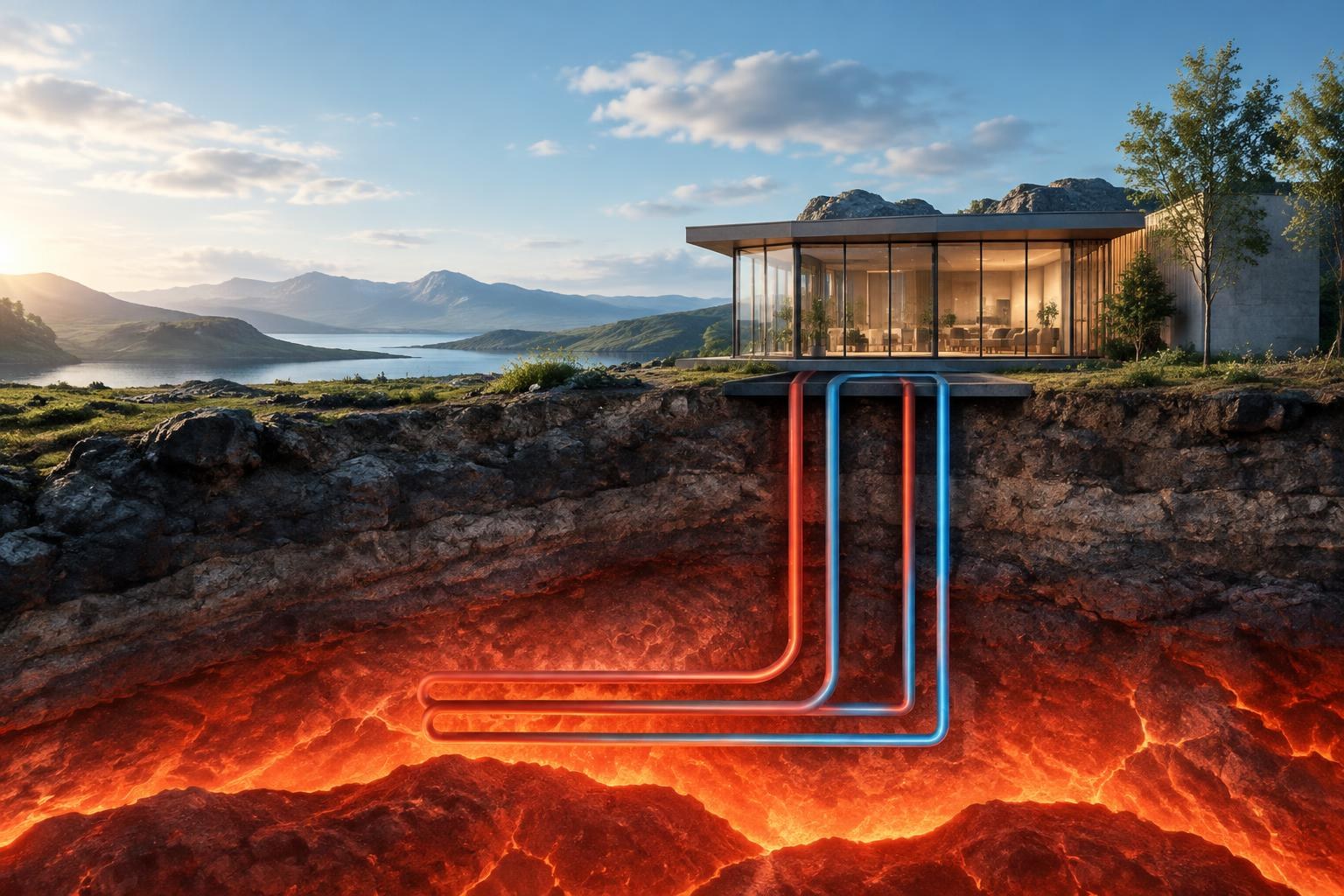
Key ideas
- Geothermal energy can be used to generate electricity, heat and cool buildings, or supply heat directly to buildings and processes.
- In the geothermal systems described by the DOE, heat, a fluid, and permeability provide conditions for generating electricity; the EIA describes dry steam, flash steam, and binary cycle plants.
- Heat pumps exchange heat with the subsurface, while direct use harnesses hot water for heating or processes without necessarily involving electricity generation.
One resource, different uses
Geothermal energy is heat from the Earth. According to the U.S. Department of Energy (DOE), geothermal resources include underground deposits of hot water, natural or created through human intervention, at different temperatures and depths. Wells can be drilled from a few feet to several miles deep to access steam or hot water and bring that heat to the surface. The DOE describes these resources and their applications.
There is more than one use. Heat can be converted into electricity; the stable temperature of the subsurface can be used to heat or cool buildings; and hot water can be used directly in buildings or industrial processes. These are distinct pathways: not every geothermal installation produces electricity, and heating and cooling with heat pumps is not the same as extracting steam to drive a turbine.
The key difference is what is obtained from underground and what transformation is needed. To generate electricity, the process depends on the type of plant: it may use steam from the reservoir, convert some of the hot water into steam by reducing its pressure, or transfer the heat to another liquid that vaporizes and drives the turbine. For heating and cooling, a heat pump exchanges energy with the ground, which acts as a thermal source or sink. In direct use, hot water is used to supply heat, rather than for the stated purpose of generating electricity.
From hot rocks to electricity
In the geothermal systems described by the DOE, hot rocks, a fluid, and permeability—the ability of that fluid to move between the rocks—provide conditions for generating electricity. The DOE notes that permeability can be natural or created; the fluid circulates through the hot rocks, absorbs heat, and can carry it to the surface through wells. Its general explanation describes converting this thermal energy into steam to drive turbines; however, plant configurations differ in how the steam is produced. The DOE details these conditions and the geothermal process.
As a point of reference, the EIA describes three basic types of geothermal power plants. In dry steam plants, steam from the reservoir directly drives the turbine. In flash steam plants, hot water under high pressure reaches the surface and, as the pressure drops, some of it quickly turns into steam. In binary cycle plants, geothermal water transfers heat to another liquid with a lower boiling point; this second fluid vaporizes and drives the turbine. The EIA states that in this last system, geothermal water does not come into contact with the turbine and is returned underground. EIA: types of geothermal power plants.
| Application or technology | What it harnesses | How it is used, according to the sources |
|---|---|---|
| Dry steam | Steam from a geothermal reservoir | The steam directly drives a turbine. |
| Flash steam | Hot water under high pressure | As the pressure drops, some of the water turns into steam; when the steam cools, it turns back into water and is reinjected underground. |
| Binary cycle | Heat from geothermal water | The heat vaporizes a second liquid, which drives the turbine; geothermal water does not touch the turbine and is returned underground. |
| Geothermal heat pump | Relatively stable subsurface temperature | The ground acts as a heat sink when aboveground temperatures are warmer and as a heat source when they are colder. |
| Direct use | Underground hot water | Heat is supplied to buildings or processes, for example in greenhouses or fish farming. |
The table summarizes mechanisms described by the DOE and the EIA; it does not establish which is more efficient or more suitable in a particular location. The EIA states that the geothermal power plants it describes need very hot water or steam, in a range of 300 °F to 700 °F. This range is given for power plants overall, not as a requirement broken down by each technology type or as a general requirement for all geothermal applications. EIA: geothermal resources and use.
Heating, cooling, and direct-use heat
Geothermal heat pumps use the ground for heat exchange. When aboveground temperatures are warmer, the subsurface acts as a sink that absorbs heat; when they are colder, it acts as a heat source. The DOE distinguishes this function from district heating and cooling systems, which can combine several geothermal technologies—for example, a series of heat pumps—to serve buildings, campuses, or communities. The DOE explains these thermal uses.
Direct use follows a different approach: wells, generally deeper than those used for heat pumps, bring up underground hot water to provide hot water to buildings, space heating, or heat for industrial processes. The DOE lists fish farming, greenhouses, and the drying of pulp, paper, wood, and other materials among the examples. In these cases, the purpose is to use heat directly, not to describe a conversion to electricity.
The practical difference between these options depends on the available resource and the demand to be met: electricity, heating and cooling, or heat for a process. The sources consulted explain the mechanisms but do not provide a quantitative comparison of costs, performance, or installation requirements across the three pathways. Therefore, this description allows their functions to be distinguished, not a decision about which is superior in every situation.
Scope and limitations of the information
The DOE page presents geothermal energy as a resource with multiple uses and describes opportunities, technologies, and programs. It also presents estimates of potential for the United States: more than 17.000 district heating systems and geothermal heat pumps equivalent to 28 million households by 2050. For electric capacity, it distinguishes two analyses: the 2019 GeoVision analysis indicated a potential of up to 60 gigawatts; the 2022 Enhanced Geothermal Shot™ analysis indicated a potential of 90 gigawatts by 2050, conditional on achieving aggressive cost reductions in enhanced geothermal systems. These are projections of potential, not results already achieved or guarantees of deployment. The DOE presents the estimates and their context.
The DOE also notes that power plants can generate electricity consistently and adjust their output in response to changes in demand. These characteristics describe what the institution attributes to geothermal power plants; the material provided does not include an independent comparison of their performance with other energy sources. The EIA helps contextualize the generation technologies, but it does not independently corroborate the DOE’s estimates or claims.
In short, geothermal energy is not a single technology: Earth’s heat can be converted into electricity, exchanged with buildings through heat pumps, or supplied directly for thermal uses. The available information makes it possible to distinguish these mechanisms, but not to establish their feasibility, cost, or impact at a specific site.
What we know and its limits
The explanation is based on institutional pages from the U.S. Department of Energy and the EIA; the EIA’s background sources do not independently corroborate the DOE’s claims. The range of 300 °F to 700 °F applies to the EIA’s general description of geothermal power plants and is not broken down by plant type. Estimates for the United States are presented as potential projections; the estimate of 90 gigawatts by 2050 is conditional on aggressive cost reductions in enhanced geothermal systems. The material provided does not allow for a quantitative comparison of the costs, performance, impacts, or feasibility of the technologies, or for determining which is suitable for a particular site.
Follow the evidence
The original sources for exploring this explanation and its limits.
Image credits
SciClue · AI-generated illustration (OpenAI) · Original source · Recurso editorial de SciClue · generado con IA