





Key ideas
- Uranium fission releases heat; in the light-water reactors described by the DOE, water acts as a coolant and moderator.
- In a PWR, steam is produced in a separate water source using a heat exchanger; in a BWR, it forms inside the vessel and is carried to the turbine.
- The excerpt explains the mechanism and the paths taken by water, but does not quantify efficiency or allow comparisons of safety, costs, or environmental impacts.
From fuel to heat
A nuclear reactor houses and controls a fission chain reaction. In the explanation from U.S. Department of Energy (DOE), fission occurs when atoms split and release energy. The reactor harnesses that energy as heat: it heats water, produces steam, and the steam turns a turbine that generates electricity.
The fuel described by the DOE is uranium. It is processed into small ceramic pellets, which are stacked in sealed metal tubes called fuel rods. The rods are grouped into assemblies, which form the reactor core. The source notes that the number of assemblies depends on the power level, so the description provides a general structure, not a single configuration for all reactors.
Inside the vessel, the rods are submerged in water. In the light-water reactors described by the source, water serves two functions: it acts as a coolant, carrying heat, and as a moderator, slowing the neutrons produced by fission. According to the DOE, this moderation helps sustain the chain reaction. Control rods make it possible to regulate its rate: inserting them into the core slows it down, and withdrawing them increases it.
Two designs and two paths for water
The DOE distinguishes two types of light-water reactors operating in the United States: pressurized-water reactors (PWRs) and boiling-water reactors (BWRs). In both, ordinary water serves as the coolant and moderator. The difference detailed by the source is where the steam that drives the turbine is produced and how it gets there.
In a PWR, the water in the core is kept at high pressure to prevent it from boiling there. Fission heats it, and it is then pumped through tubes inside a heat exchanger. Those tubes heat a separate water source, which produces the steam destined for the turbine. The water from the core returns to the reactor to be heated again.
In a BWR, water is heated in the core, and steam is produced directly inside the vessel. Pipes carry that steam to the turbine. The DOE adds that any steam that is not used condenses back into water and is reused in the process.
| Aspect | Pressurized-water reactor (PWR) | Boiling-water reactor (BWR) |
|---|---|---|
| Where steam is produced | In a separate water source, heated through tubes in a heat exchanger | Inside the reactor vessel |
| Path to the turbine | Steam from the separate source drives the turbine | Pipes carry steam from the vessel to the turbine |
| Path of the core water | It is kept at high pressure and returns to the reactor after passing through the heat exchanger | It is heated in the vessel; unused steam condenses and is reused |
The comparison summarizes the paths described by the DOE; it does not measure the performance of the designs. The source indicates that more than 65% of commercial reactors in the United States are PWRs and that approximately one-third of those operating there are BWRs. It does not provide a year or methodology for these proportions, so they should not be read as a dated distribution or extrapolated to other countries.
What this description explains—and what it does not
The sequence presented by the DOE makes it possible to identify the general mechanism: fission releases heat, water carries it and participates in steam production, and the steam drives a turbine to generate electricity. It also explains water’s moderating role and how control rods affect the reaction rate. The difference between PWRs and BWRs is limited to the path of the water and where the steam is produced.
As general context, the EIA describes nuclear energy as electricity obtained from the heat produced by splitting uranium atoms through fission. This reference places the process among energy sources, but it does not constitute independent corroboration of the operating details provided by the DOE.
The EIA distinguishes between energy efficiency and conservation. That distinction helps avoid confusing the conversion mechanism described here with an evaluation of a reactor’s performance: the excerpt provides no efficiency measurements for PWRs or BWRs. The EIA reference also does not compare these designs.
Therefore, the material makes it possible to explain how fuel, fission, heat, steam, and the turbine are linked, and to point out an operational difference between the two types of reactor. It is not enough to determine which is more efficient, safe, or economical, or to compare their environmental impacts. Those questions require data that do not appear in the available excerpts.
What we know and its limits
The DOE’s main source is an institutional explanation of how the system works, not a comparative assessment. The excerpts provide no measurements of electricity production or efficiency, cost data, information on safety or environmental impacts, life-cycle emissions, or management of used fuel. The PWR and BWR proportions cited by the DOE include no year or methodology. The EIA references provide general context and do not independently corroborate the operating details described by the DOE.
Follow the evidence
The original sources for exploring this explanation and its limits.
- Sources of energy
EIA
Institutional reference for context. It does not constitute independent confirmation of the main source's findings. - Efficiency and conservation
EIA
Institutional reference for context. It does not constitute independent confirmation of the main source's findings. - Nuclear energy: how a reactor works
U.S. Department of Energy
Institutional source from the U.S. Department of Energy. The excerpt used for comparison is retained. Reference resource: the recorded date is the access date, not the document's publication date.
Image credits
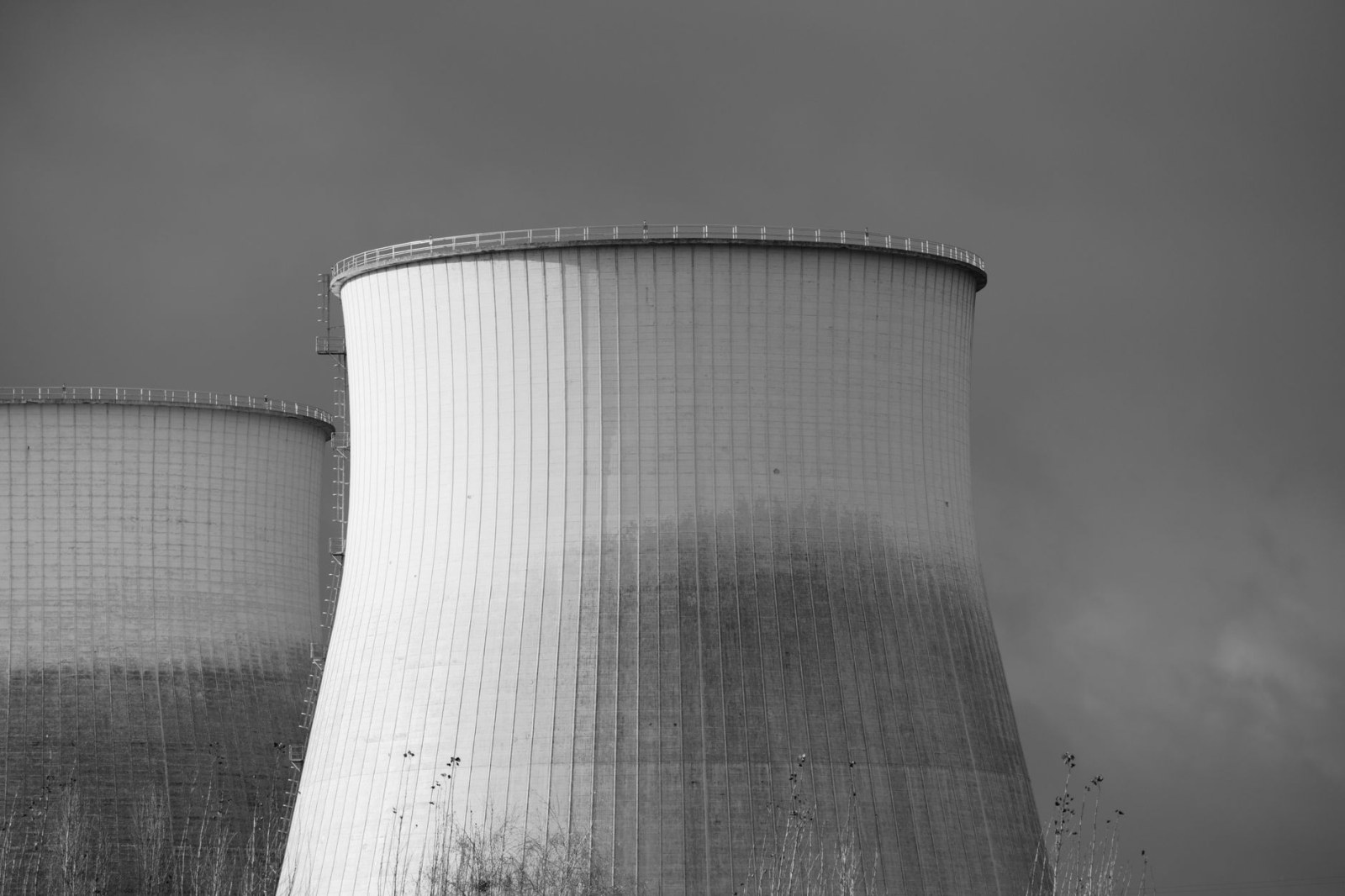
Elegant black and white depiction of cooling towers at a nuclear power station, symbolizing energy and industry. · Photo by Budget Bizar on Pexels · Original source · Pexels License · Resized and re-encoded as JPEG; full framing preserved.