





Key ideas
- NYPA describes the intake of water from the Niagara River and the main facilities; a 2003 technical report documents the route from the Lewiston Reservoir through its plant and the forebay to Robert Moses, as well as the return pumping.
- Turbines and generators convert the movement of water into electricity; pumping consumes electricity to raise and store water, according to the general mechanism of pumped storage.
- NYPA states a maximum of 2.6 million kilowatts and that generation began in 1961; the sources do not quantify generation by period, the current net balance, or the project’s share of the state’s supply.
From the Niagara River to the Forebay
The Niagara Power Project, located in Lewiston, New York, harnesses water from the Niagara River through a system of intakes, conduits, reservoirs, and generating plants. The New York Power Authority (NYPA) states that a tunnel with gates diverts water from the river to two reservoirs. Among the project’s components, it lists two intake structures, two underground conduits, associated pumping stations, a headrace or forebay (forebay), the Lewiston Reservoir, the Lewiston Pump Generating and Robert Moses Niagara plants, and the Niagara substation. The facility is 4.5 miles downstream of Niagara Falls.
The authority’s description provides the general layout, while a 2003 technical report provides historical details about the hydraulic connection. According to the report, the Lewiston Reservoir supplies water to the Lewiston plant; its discharge flows to the forebay, which in turn discharges toward the Robert Moses plant. Water is pumped from the forebay to refill the Lewiston Reservoir, and the forebay also receives water diverted from the Upper Niagara River through two buried conduits. Thus, the documented circuit links the intake, pumping, and generation at the two plants.
That report describes a historical configuration and records fluctuations in the forebay associated with electricity requirements and restrictions depending on the time of day, day of the week, and season. It does not establish an operating schedule in effect for 2026. The NYPA page, for its part, presents the project’s components and general operation but does not detail a current pumping schedule.
How the Movement of Water Is Converted into Electricity
At a hydroelectric plant, moving water passes through a conduit and spins the blades of a turbine. The turbine drives a generator, which converts the energy of motion into electricity. The available energy depends on the volume of flow and the difference in elevation—also called hydraulic head—between two points: in general, a higher flow rate or a greater elevation difference allows more electricity to be generated. This is the general principle described by the U.S. Department of Energy; it explains the physical conversion but does not by itself confirm specific figures or operations at the Niagara Power Project.
Applied to the circuit described by NYPA and the 2003 report, water stored in Lewiston can pass through the Lewiston plant and discharge into the forebay; from there it is conveyed to Robert Moses to generate electricity. In the reverse direction, pumps raise water from the forebay to the Lewiston Reservoir. Pumping consumes electricity: it makes it possible to store water at a higher elevation so that it can later pass through the turbines again. General documentation on pumped storage explains this exchange between consumption during replenishment and generation during discharge.
| Part of the circuit | Documented function | Scope of the information |
|---|---|---|
| Intake and conduits | The project diverts water from the Niagara River; the 2003 report specifies diversions from the Upper Niagara River through two buried conduits. | The sources do not provide a complete diagram of every connection among the intakes, conduits, and reservoirs. |
| Lewiston Reservoir and Lewiston plant | The reservoir supplies water to the plant; the plant discharges into the forebay. | The report describes the historical configuration, not a current operating schedule. |
| Forebay and pumping | Water is pumped from the forebay to refill the Lewiston Reservoir. | No current data are provided on schedules, electricity consumption, or the volume of water pumped. |
| Robert Moses Niagara plant | The forebay discharges toward this plant for hydroelectric generation. | Actual generation and the individual contribution of each plant are not broken down. |
Power, Storage, and Supply
NYPA attributes the project’s generation to the Robert Moses Niagara Power Plant and the Lewiston Pump Generating Plant. It states that the two plants have a combined total of 25 turbines, driven by a flow of 748,000 gallons of water per second. The page does not break down how many turbines belong to each plant or provide generation figures for a given period.
The same source states that the project can provide up to 2.6 million kilowatts of electricity and identifies it as the largest producer of electricity in New York State. Kilowatts express power, not an amount of energy produced over an interval. To determine the energy generated during a period, operating data for that period would be needed; the stated maximum and number of turbines are not enough to calculate it. Nor do they make it possible to calculate net generation after the pumps’ electricity consumption.
The distinction matters in a pumped-storage facility: some electricity is used to raise and store water, while the subsequent discharge makes it possible to generate electricity. The U.S. Department of Energy’s general information explains this mechanism but does not quantify the Niagara Power Project’s consumption or net balance. Therefore, these sources do not allow us to infer how much net electricity it delivers during a specific period.
NYPA says it sells the electricity to state facilities, municipal and rural electric cooperatives, and large utilities. The information does not break down the electricity among those buyer categories or quantify the share it represents in New York’s total supply. The Niagara substation is listed among the project’s components, but the sources provided do not describe the subsequent distribution of electricity through the grid.
History and Scope of the Explanation
NYPA states that the Niagara plant first produced electricity in 1961 and was then the largest hydroelectric facility in the Western Hemisphere. The authority’s description also presents the project as an important part of the state’s electricity generation. These historical and scale references describe what the institutional source states; they do not in themselves constitute an independent assessment of its current operation.
Taken together, the mechanism involves conveying water to the reservoirs and plants, using its movement to spin turbines and generators, and pumping water back to the Lewiston Reservoir for storage. The 2003 technical report helps clarify the route between Lewiston, the forebay, and Robert Moses; the U.S. Department of Energy references explain the general principles of hydroelectric conversion and pumped storage. None of these general references replaces current operating data for the project. Therefore, this explanation does not determine pumping schedules in 2026, generation by period, pump consumption, or quantified environmental effects.
What we know and its limits
The explanation relies mainly on NYPA’s institutional description and a 2003 technical report for the historical circuit configuration; the Department of Energy sources are used only to explain general principles. The older report does not establish schedules in effect in 2026. The sources do not make it possible to quantify generation by period, pumping consumption or the current net balance, the distribution of electricity among buyers, its contribution to New York’s total supply, or environmental effects.
Original sources5
The original sources for exploring this explanation and its limits.
- Hydropower: how it harnesses the movement of water EIA
- How the Niagara hydroelectric project transforms the energy of water into electricity New York Power Authority
-
How Hydropower Works
U.S. Department of Energy
Institutional reference for context. It does not constitute independent confirmation of the main source's findings. -
Pumped Storage Hydropower
U.S. Department of Energy
Documentation of the study or scientific context. It does not constitute independent corroboration because it belongs to the same organization. -
Site Characterization Report2003,section2.5.2 NYPA Niagara Project Forebay (PDF page32,printed23)
New York State Department of Environmental Conservation archive; Miller Springs Remediation Management technical report
Documentation of the study or scientific context. It does not constitute independent corroboration because it belongs to the same organization.
Image credits
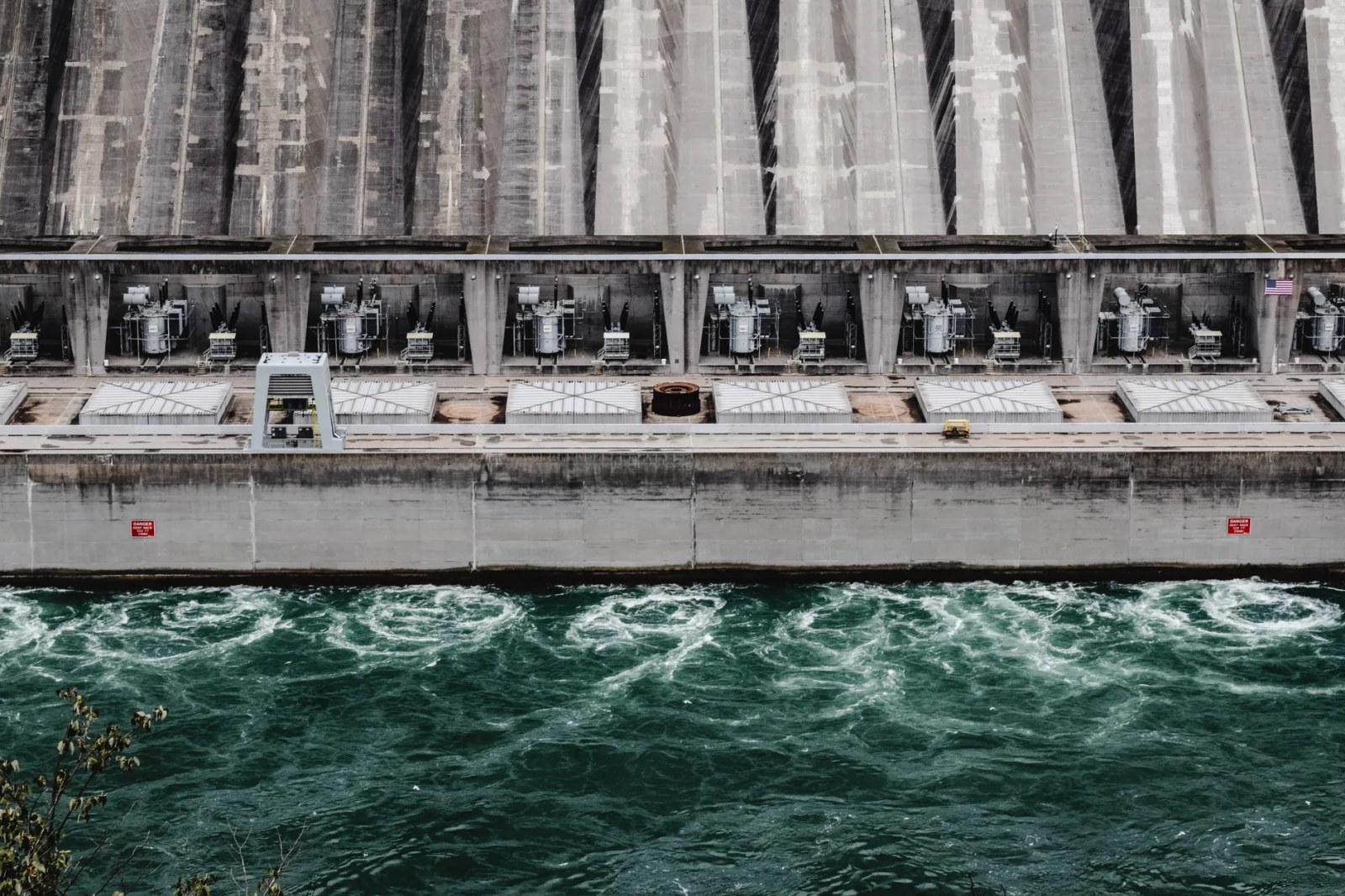
A stunning aerial view of the hydro power plant at Niagara Falls, showcasing engineering marvels and rushing water. · Photo by Eva Bronzini on Pexels · Original source · Pexels License · Resized and re-encoded as JPEG; full framing preserved.