





Key ideas
- The natural greenhouse effect traps heat near the surface; NASA notes an average surface temperature of 15 °C (59 °F).
- NASA describes water vapor as a feedback and links the alteration of the energy balance during the last century mainly to human activities, particularly the burning of fossil fuels.
- GISTEMP provides methodological context on anomalies and record coverage, but the excerpt does not quantify a recent trend or independently corroborate the explanation of the greenhouse effect.
The greenhouse effect in the climate system
The greenhouse effect is the process by which certain substances in the atmosphere trap heat near Earth’s surface. In its institutional explanation, NASA lists carbon dioxide, methane, ozone, nitrous oxide, chlorofluorocarbons, and water vapor among the greenhouse gases. The source presents this natural process as one of the conditions that contribute to Earth maintaining an average surface temperature of 15 °C (59 °F), suitable for life to thrive. NASA: what is the greenhouse effect
NASA’s comparison to a blanket is an explanatory image: it describes heat retention, not a solid covering around the planet. The same page states that if carbon dioxide were removed, Earth’s greenhouse effect would collapse and the surface temperature would fall by approximately 33°C (59°F). The excerpt does not explain the method or assumptions behind this estimate, so it is presented here as a figure reported by NASA, not as a calculation that can be reconstructed from the available documentation.
The explanation distinguishes the natural effect from the changes that intensify it. According to NASA, during the last century, human activities, primarily the burning of fossil fuels, have released carbon dioxide and other greenhouse gases into the atmosphere and altered Earth’s energy balance. The page adds that carbon dioxide has increased in the atmosphere and ocean, and that its atmospheric level has risen steadily for decades. The additional heat trapped near the surface, the source notes, causes temperatures to rise. The excerpt does not quantify the magnitude of these changes.
Three key points about the mechanism
-
The natural effect traps heat. Greenhouse gases contribute to surface warming. NASA notes an average surface temperature of 15 °C (59 °F) in the context of this natural effect.
-
Water vapor is a feedback. NASA indicates that the amount of water vapor responds to temperature changes. It characterizes it as a feedback because it amplifies the effect of the forces that initiated the warming. This describes its role in the system’s response, but the excerpt does not quantify how much each gas contributes or identify those initial forces in detail.
-
Human activities have altered the energy balance. The primary source links this alteration, during the last century, mainly to the burning of fossil fuels and emissions of carbon dioxide and other gases. It also states that carbon dioxide has increased in the atmosphere and ocean; the excerpt provides no time series or figures to measure these increases.
| Aspect | What the source indicates | What the file does not allow us to establish |
|---|---|---|
| Natural greenhouse effect | Gases trap heat near the surface; NASA notes an average surface temperature of 15 °C (59 °F). | The quantitative contribution of each gas. |
| Carbon dioxide | NASA attributes a crucial role to it and states that its removal would cause an approximate decrease of 33°C (59°F). | The method and assumptions behind this estimate. |
| Water vapor | Responds to temperature changes and acts as a feedback. | A quantification of its contribution or the strength of this feedback. |
| Temperatures | GISTEMP describes how anomalies are analyzed and why record coverage matters. | A recent trend or a measurement that quantifies the change associated with the greenhouse effect here. |
Water vapor and the context of the water cycle
An institutional NASA reference on the water cycle provides context for understanding that vapor circulates between the surface and the atmosphere and that, when water changes state, it transports and releases latent heat. This description helps situate water within the climate system, but it is not independent corroboration of the main page’s claims about the greenhouse effect. Nor, by itself, does it make it possible to calculate the strength of water vapor feedback.
The distinction between the general mechanism and its quantification is important. The primary source states that vapor amplifies the effect of forces that initially caused warming; the material provided does not explain how to measure this amplification or break down the contributions of the different gases. Therefore, the explanation can describe the relationship indicated by NASA, but cannot turn it into a numerical estimate or a detailed attribution.
What the GISTEMP method contributes
The documentation for NASA GISS GISTEMP provides methodological context for interpreting temperature analyses, not independent proof of the mechanism described on the main page. GISTEMP explains that anomalies express how much warmer or colder a period was than normal for a location and time of year. For this analysis, the reference is the 1951-1980 average; the documentation itself clarifies that this is a specific GISS baseline, not a universal one.
GISTEMP also explains why it is not enough to simply average all available temperatures: the results would depend on the location and elevation of the stations, as well as the periods for which they report. The documentation describes the use of temperature anomalies from weather stations and water temperature reports from ships and buoys. It also limits the analysis to the period beginning in 1880 because of sparse spatial coverage and declining quality of earlier data.
These methodological choices help explain how temperature series are constructed and what difficulties they present. The excerpt does not provide a recent result or quantify how much global temperature has changed. Nor does it independently verify the primary source’s physical explanation of the greenhouse effect. The water cycle page and GISTEMP documentation are contextual references with different functions, not independent confirmations of that explanation.
Scope of the explanation
The file allows us to explain the general mechanism of the greenhouse effect, distinguish the role of water vapor as a feedback, and summarize NASA’s description of the alteration of the energy balance associated with human activities. It also allows us to note that temperature analysis must consider anomalies, coverage, and differences between records.
It does not allow us to quantify recent trends, separate the contribution of each gas, or precisely assess the magnitude of the changes described. The estimate of approximately 33°C (59°F) lacks methodological details here, and the contextual references do not provide independent corroboration of the primary source. The sources are institutional; the file does not document independent peer review.
What we know and its limits
The file provides no recent temperature series, quantification of each gas’s contribution, or method and assumptions behind the estimate of approximately 33°C (59°F). GISTEMP describes methods and coverage limitations, but the excerpt presents no current quantitative results. The references are institutional and do not amount to independent peer review or independent corroboration of the primary source.
Follow the evidence
The original sources for exploring this explanation and its limits.
- GISTEMP: Definitions, References, and Methods
NASA GISS
Reference consulted to expand and cross-check the explanation. Its role and limitations are indicated alongside the content. - The water cycle
NASA
Institutional reference for context. It does not constitute independent confirmation of the main source's findings. - Climate system: what is the greenhouse effect
NASA
NASA institutional source. The excerpt used for comparison is preserved. Reference resource: the recorded date is the date of access, not the document's publication date.
Image credits
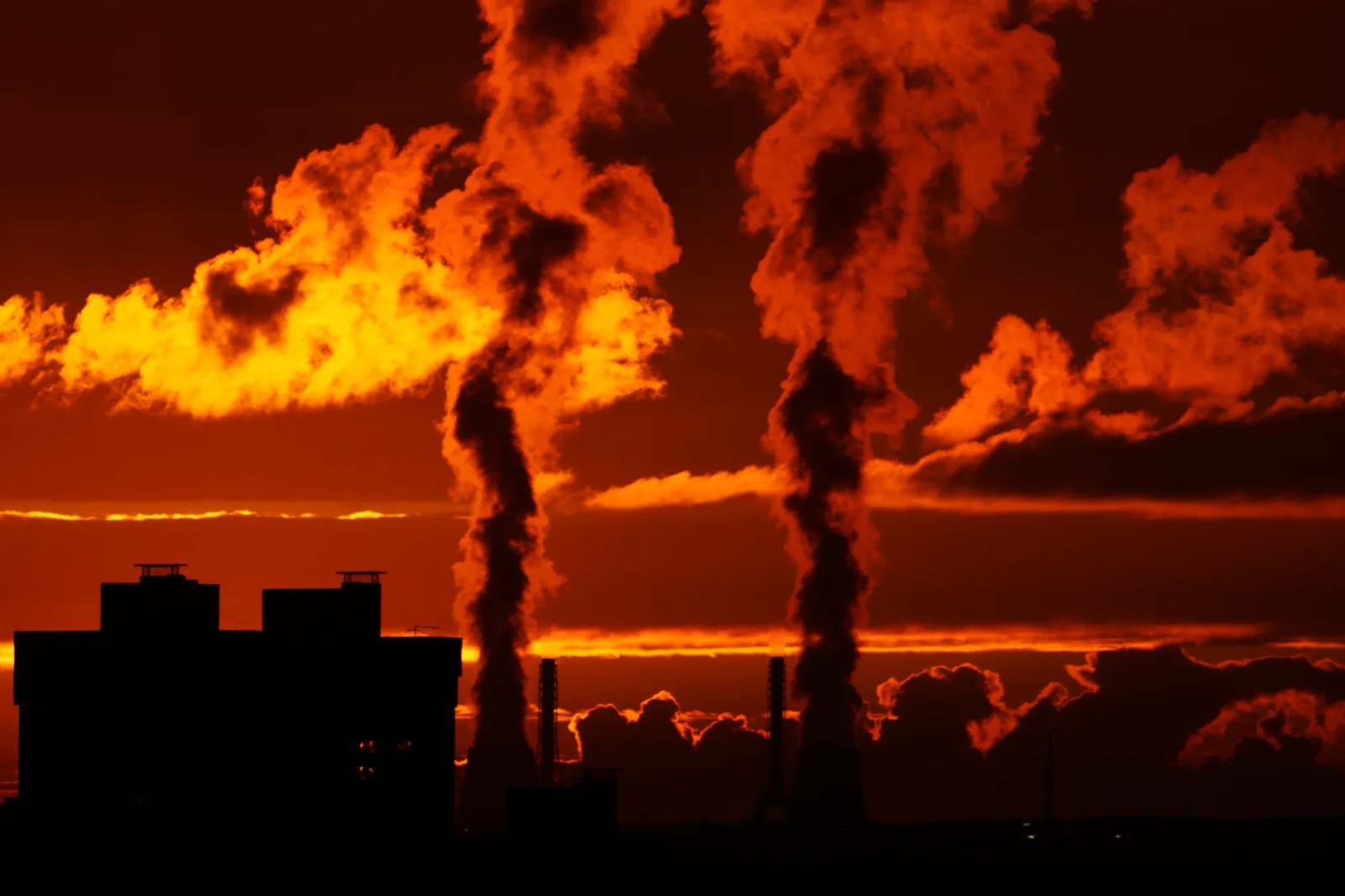
Dramatic industrial skyline silhouette with smoke against a vibrant orange sunset in Saint Petersburg, Russia. · Photo by Stanislav Kondratiev on Pexels · Original source · Pexels License · Resized and re-encoded as JPEG; full framing preserved.