





Key ideas
- The EPA institutional page brings together more than 60 tools and resources for different areas of improvement, including life cycle, energy, water, waste, and chemicals.
- Life cycle thinking broadens analysis from resource extraction through use and end-of-life management, and can help identify shifts in impacts among stages, regions, or media.
- Tools address different questions and scopes: inventories, exposure estimates, and sector-specific resources are not interchangeable and are not, by themselves, sufficient to establish a product’s total impact.
From the production process to the life cycle
Evaluating the environmental performance of a production activity requires looking beyond what happens inside a plant. Life cycle thinking considers the environmental, social, and economic impacts of a product throughout its journey: raw material extraction, production, packaging, distribution, use, maintenance, and finally reuse, recycling, recovery, or disposal. The United Nations Life Cycle Initiative presents this approach as a way to broaden analysis beyond the manufacturing site (UNEP Life Cycle Initiative).
This broader perspective matters because an improvement at one stage can shift pressures to another stage, another region, or a different medium. The UNEP source notes that life cycle approaches seek to avoid such shifting and to consider impacts on air, water, and soil. So the question is not only whether a factory uses less energy, but also what resources and emissions are associated with the product throughout its life cycle.
Life cycle assessment (LCA) is a methodology that quantifies resources consumed and relevant emissions, and relates them to environmental and health impacts, as well as issues connected with resource depletion. According to UNEP, it can cover everything from resource extraction to production, use, recycling, and disposal of the remaining waste. The analysis can support decisions about design, production, procurement, and management, but it does not guarantee that one alternative is better in every context.
What the EPA collection offers
The institutional page of the United States Environmental Protection Agency (EPA) brings together more than 60 tools and resources for participants, stakeholders, and assessment teams working in different areas of improvement (EPA: E3 Sustainability Tools). It does not present a single instrument or a recent research finding: it groups resources with different purposes and scopes.
Some directly address life cycle assessment. EPA includes Life Cycle Assessment (LCA): Principles and Practice, an introduction to the general uses and main components of LCA, intended for businesses, federal facilities, industry organizations, and academia. It also lists the U.S. Life Cycle Inventory Database, which accounts for energy and material flows associated with the production of materials, components, or assemblies in the United States. The description distinguishes gate-to-gate, cradle-to-gate, and cradle-to-grave boundaries: they cover different segments of the cycle and should not be treated as equivalent.
Other resources focus on specific aspects of processes. The collection mentions tools for managing and comparing energy consumption, emissions calculators, and resources for reducing waste. For example, the GEMI Water Sustainability Tool helps companies develop a water strategy, track their water use, identify supply risks and conservation opportunities, and prepare a business case for implementing improvements. The ENERGY STAR guide to energy savings searches describes a two- to three-day activity in which employees identify low-cost savings opportunities through behavioral, operational, and maintenance actions.
The collection also includes tools related to chemicals. ChemSTEER estimates occupational exposure through inhalation and dermal contact, as well as chemical releases to air, water, and soil associated with certain industrial and commercial operations. TRACI examines potential impacts linked to the use of raw materials and chemical releases from production processes. These tools address different questions: an exposure estimate or an assessment of potential impacts is not, by itself, equivalent to a complete life cycle inventory.
Compare tools according to the question
The selection depends on the decision to be informed, the stage being analyzed, and the available data. The table summarizes examples described by EPA; it does not compare their accuracy or claim that they are interchangeable.
| Resource cited by EPA | What it addresses according to the institutional description | Scope to distinguish |
|---|---|---|
| Life Cycle Assessment (LCA): Principles and Practice | Introduction to LCA, its general uses, and main components; explains how to incorporate life cycle-based environmental performance considerations into decision-making. | Introductory methodological framework; not an assessment result for a specific product. |
| U.S. Life Cycle Inventory Database | Energy and material flows associated with the production of materials, components, or assemblies; includes gate-to-gate, cradle-to-gate, and cradle-to-grave boundaries. | The boundaries cover different parts of the cycle; the page provides no figures for a specific case. |
| GEMI Water Sustainability Tool | Tracking water use, identifying supply risks and conservation opportunities, and developing a business strategy. | Focuses specifically on water and business management, not a comprehensive assessment of all impacts. |
| ChemSTEER | Estimates occupational exposure through inhalation and dermal contact, and chemical releases to air, water, and soil in certain operations. | Focuses on exposure and releases associated with operations; it is not, by itself, equivalent to a complete LCA. |
| WARM | Voluntary tracking and reporting of greenhouse gas emissions reductions across different solid waste management practices. | Focuses on waste practices and greenhouse gas emissions. |
The distinction between tools relates to sustainable materials management as described by EPA: a systematic approach to using and reusing materials more productively throughout their life cycles, reducing toxic chemicals and environmental impacts, and seeking to ensure sufficient resources for present and future needs (EPA: Sustainable Materials Management Basics). EPA notes that looking at the complete life cycle can help identify opportunities such as redesigning a product with different, fewer, less toxic, or more durable materials, and making it easier to disassemble at the end of its useful life. The reference provides context on possible options; it does not show that all of them are appropriate for every product or company.
How to interpret the results
An analysis can help identify opportunities, but its usefulness depends on clearly defining the question. If the aim is to improve a facility’s energy consumption, a specific energy resource may be relevant. If materials, emissions, or later stages are being studied, a broader life cycle perspective may be needed. A water, energy, chemical, or waste tool provides information about its specific scope, not automatically about overall environmental performance.
It is also useful to distinguish inventory from impact. The EPA page describes inventory databases that account for material and energy flows; other tools estimate potential impacts or make it possible to track specific indicators. The institutional descriptions do not present comparative product results, modeling assumptions, or validations of each tool here. Therefore, they do not allow conclusions about which product, technology, or manufacturer has the lowest impact, or quantification of the benefits of an intervention.
The EPA collection serves as a starting point for identifying available resources and matching them to assessment questions. Life cycle thinking avoids limiting the analysis to the production site, while the choice of tool should be tailored to the stages, data, and impacts being studied. To compare alternatives, it is essential to interpret each resource according to the scope it actually covers.
What we know and its limits
The main source is an EPA institutional page that lists tools and summarizes their purposes; it does not provide application results, product comparisons, methodological assumptions, or validations of each resource. The explanation of life cycle thinking draws on UNEP, and the explanation of sustainable materials management draws on EPA; these are contextual references, not independent corroboration of results from specific tools. This material cannot establish which product, process, or company has the lowest environmental impact.
Follow the evidence
The original sources for exploring this explanation and its limits.
- Life Cycle Thinking UNEP Life Cycle Initiative
-
Sustainable materials management basics
EPA
Institutional reference for context. It does not constitute independent confirmation of the main source's findings. - Environmental tools for assessing the life cycle and production processes EPA
Image credits
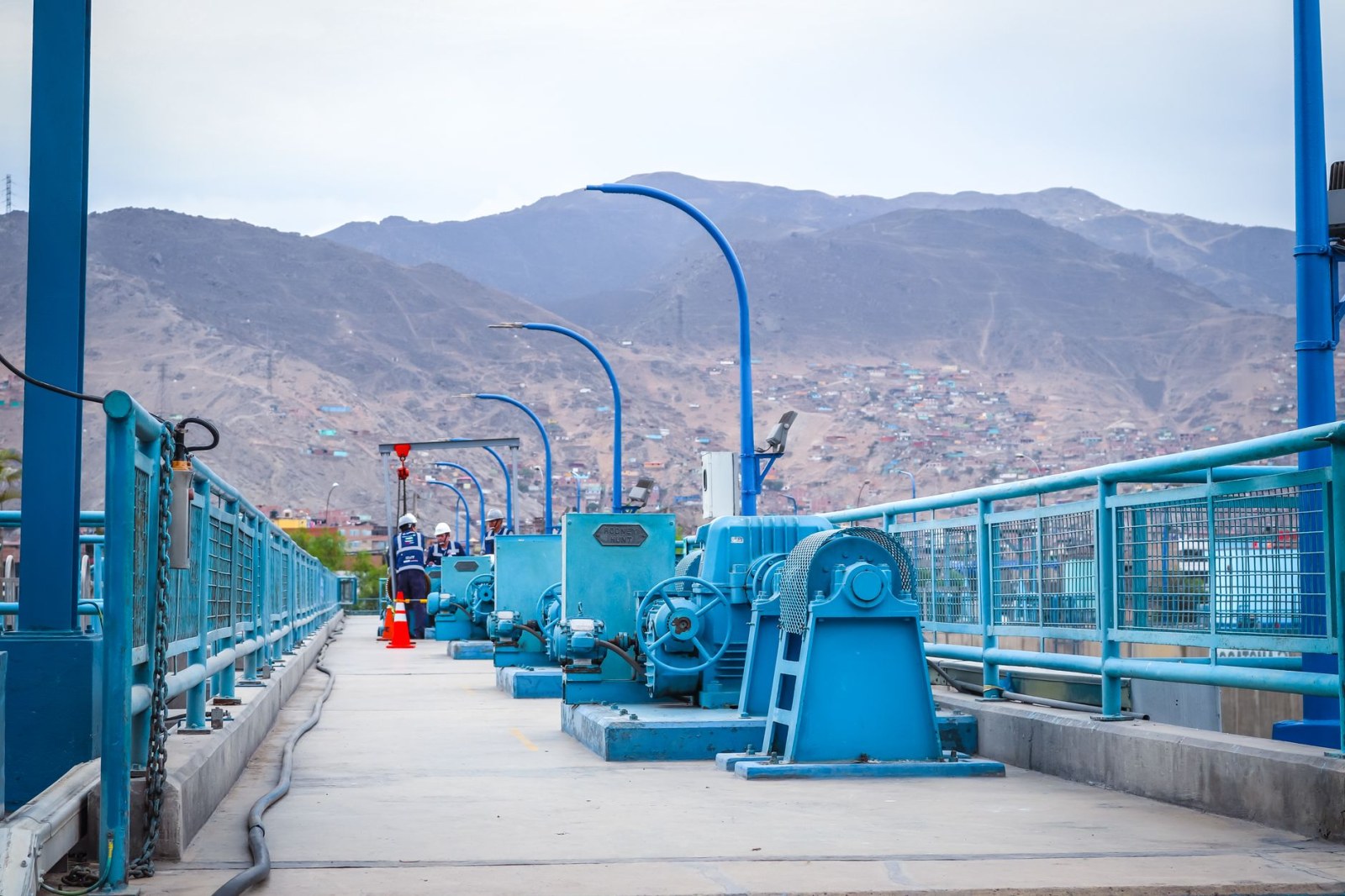
View of an industrial walkway with machinery in El Agustino, Lima, Peru. · Photo by Fernando Narvaez on Pexels · Original source · Pexels License · Resized and re-encoded as JPEG; full framing preserved.