





Key ideas
- Collection, sorting, and effective recycling are different stages.
- A material’s code does not guarantee a local recycling route.
- Prevention and reuse should also be evaluated based on the service they provide.
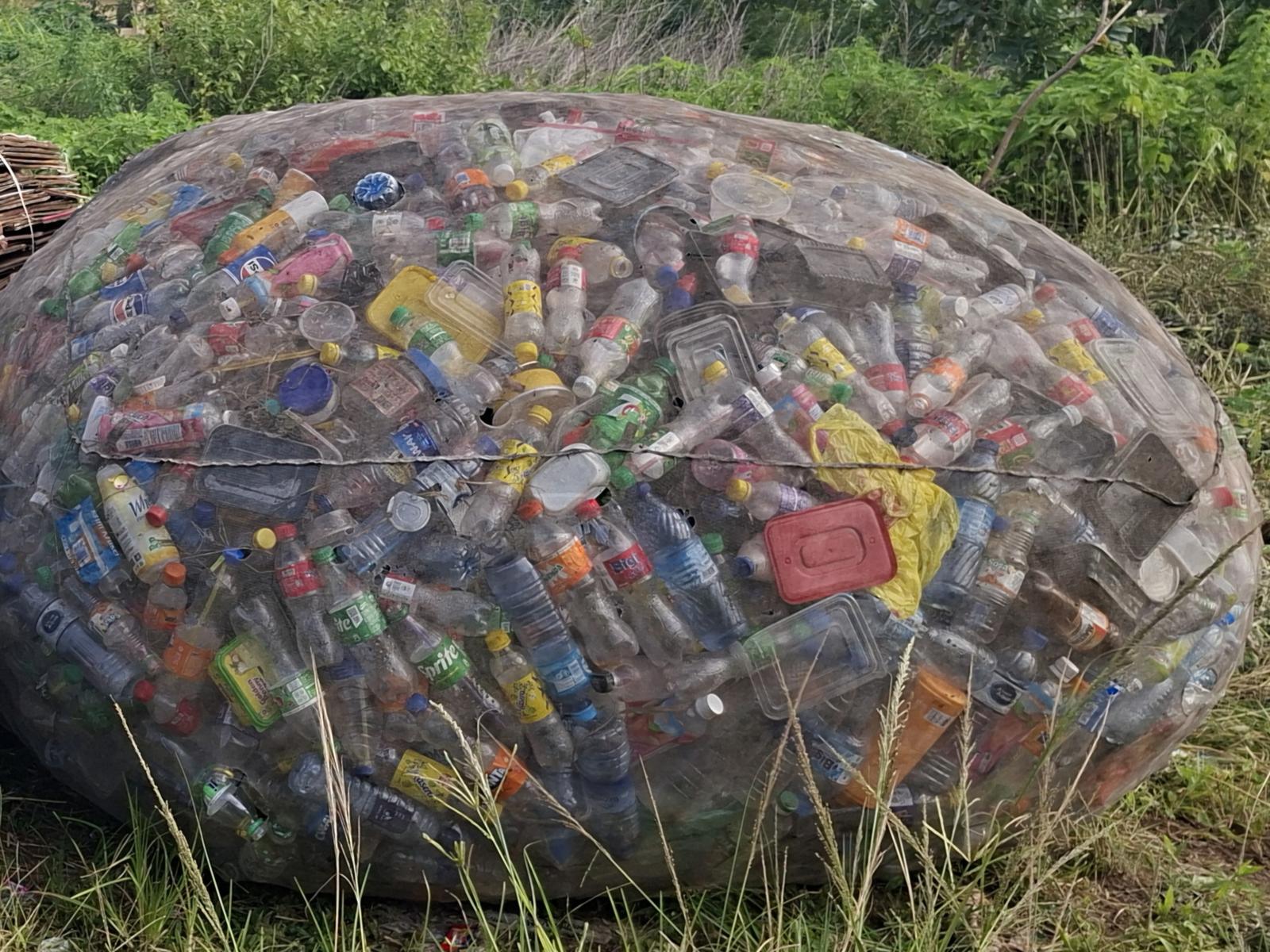
Putting a container in a bin is a visible action. What happens afterward often remains out of sight: collection, sorting, separation, processing, and manufacturing. Recycling works when that chain manages to return materials to use. Having collected a ton does not by itself prove that a ton of raw material has been replaced in new products.
A chain with several outputs
The EPA describes recycling as a process of collection, processing, and manufacturing. Between one stage and the next, there can be rejects, moisture, dirt, and incompatible materials. That is why, when we read a recycling rate, we need to know which stage is being measured and what the denominator is.
We can follow a fictional accounting example. A facility receives 100 units of waste by mass. After sorting, it obtains 70 units of a usable fraction, and after processing, 60 are left ready for further manufacturing. The three figures describe different stages. None is a real statistic, and the difference does not allow all losses to be attributed to a single cause.
The material and the object are not the same thing
An object often combines several materials, adhesives, inks, and coatings. The fact that one of its components is recyclable does not guarantee that the whole object can be separated using the available process. Size and shape also affect how a facility recognizes it. Technical feasibility also requires a collection route and demand for the resulting output.
The EPA guide to common materials emphasizes checking local conditions. Its examples apply to US systems and should not be used as municipal instructions for Spain. The general idea we can carry over is to ask the waste manager what it accepts, how it needs the material to be presented, and what exceptions apply.
What a symbol tells us
A resin identification code indicates a family of plastic. By itself, it does not guarantee that the object will be collected or effectively recycled in our municipality. Similarly, recycled content and recyclability answer different questions: one concerns the origin of some of the material; the other concerns its possible destination.
Imagine two fictional labels. One states that an object contains recovered material; the other explains a drop-off route at the end of its use. The first does not prove the second, and the second does not prove the first. To assess both, we need definitions, percentages where applicable, scope, and a verifiable reference—not just a familiar icon.
Prevention changes the balance
The EPA waste management hierarchy places source reduction and reuse ahead of recycling. Avoiding an unnecessary object can also avoid stages of extraction, manufacturing, and transportation. But specific comparisons require considering the service we want to provide.
A reusable bottle, for example, should be evaluated based on the uses it actually accumulates, along with its manufacture and cleaning. This observation does not allow us to declare a universal winner. It requires us to formulate a clear comparison: what amount of service is being provided, for how long, and within what system? Without that unit of comparison, two assessments may seem incompatible even though they address different situations.
Measuring benefits without overpromising
The EPA WARM model allows certain effects of waste management options to be compared. A model like this contains assumptions, factors, and limits. It is not a direct measurement of any facility, and its results should not be transferred automatically between countries, waste mixes, or energy systems.
The same caution applies to a headline announcing emissions savings. We need to ask what alternative is being compared against, which stages are included, and what happens to rejected materials. A figure on its own can hide methodological decisions that change how it should be interpreted.
Completing the picture
Sorting properly still matters because it facilitates the next steps. Designing products that can be repaired, taken apart, and recovered also matters. Responsibility is shared among design, management, regulations, markets, and everyday use. No single link can guarantee that the chain will be closed.
Batteries need a specific route and should not be confused with containers: the EPA explains their separate collection. For any questionable item, the practical question is what the local service says about that specific item. This small change turns a general intention to recycle into a decision connected to a real process.
Preventing the impact from shifting elsewhere
The Life Cycle Initiative proposes evaluating a product’s stages together, from resources through use and end of life. This approach helps identify whether an apparent improvement shifts an environmental burden to another process or place. An isolated recycling rate does not answer that comparison.
Consider a claim that promises less waste but does not identify transportation, energy, or the quality of the recovered material. We do not need to assume it is false; we need to define what it is comparing. The question less than what requires describing an alternative and an equivalent service.
The table is a guide to reading documents, not an environmental calculation. Completing its cells requires data from the actual system. The absence of a figure should remain visible; filling it in with an average from another region could create an impression of precision that the available documentation cannot support.
| Stage | Data worth documenting | Confusion it avoids |
|---|---|---|
| Collection | Mass, moisture, contaminants, and period | Equating what was collected with recycled material |
| Sorting and treatment | Useful outputs and rejects using the same system boundary | Counting the same flow several times |
| New manufacturing | Quality and destination of the material obtained | Assuming complete replacement of raw material |
| Environmental comparison | Equivalent service, region, and process energy | Extending an advantage at one stage to the whole system |
Explore the explanation
From waste to new use
- Sort and collect
Follow the local system’s rules to obtain usable streams.
- Sort
Separate materials and remove contaminants.
- Process
Obtain a secondary material of defined quality.
- Incorporate into another product
Check what use it is put to and what material it actually replaces.
Conceptual diagram: there are rejects and losses between stages. The arrows do not imply complete yield or one-to-one replacement.
What we know and its limits
The mass balances are fictional. The EPA sources describe US systems; sorting instructions should be obtained from the local waste manager.
19/10/2026: Context expanded, new references cross-checked, and resources with their provenance added. The original publication date is retained. AI-assisted preparation and automated checks; no human review.
Follow the evidence
The original sources for exploring this explanation and its limits.
- Used Lithium-Ion Batteries
U.S. Environmental Protection Agency
Separate management of used batteries and risks of mixing them with waste. - Recycling Basics and Benefits
U.S. Environmental Protection Agency
Stages of collection, processing, manufacturing, and use of recovered material. - How Do I Recycle Common Recyclables
U.S. Environmental Protection Agency
Material-specific limitations and the need to check with your local waste management provider. - Frequent Questions on Recycling
U.S. Environmental Protection Agency
Symbols, contamination, and differences between local systems. - Non-Hazardous Materials and Waste Management Hierarchy
U.S. Environmental Protection Agency
Hierarchy of prevention, reuse, recycling, and other forms of management. - Basic Information about the Waste Reduction Model
U.S. Environmental Protection Agency
Comparative modeling of energy use and emissions for waste management strategies. - Life Cycle Thinking
UNEP Life Cycle Initiative
Reference consulted to expand and cross-check the explanation. Its role and limitations are indicated alongside the content.