




| Classification | By composition |
|---|---|
| Location | Planet’s exterior |
| Is not equivalent to | Lithosphere |
Definition and context
The crust is the planet’s outer layer and is very thin compared with the Earth as a whole. Its structure and thickness vary between oceanic and continental regions. The boundary with the mantle is identified through evidence that includes changes in the propagation of seismic waves.
When looking at a diagram, it is useful to check whether it is drawn to scale. Many cross-sections enlarge the crust so it can be labeled, which can give a misleading impression of its proportion. Crust and lithosphere are not synonyms: the latter also includes part of the upper mantle and describes mechanical behavior. Keeping the classifications separate makes it easier to interpret maps, geological cross-sections, and explanations of tectonics.
What we know and its limits
Introductory reference sheet. Properties and applications depend on measurement conditions; consult the sources before making comparisons.
Follow the evidence
The original sources for exploring this explanation and its limits.
- The Interior of the Earth
U.S. Geological Survey
Seismic and experimental evidence about Earth's layers. - This Dynamic Earth · Inside the Earth
U.S. Geological Survey
Earth's crust, mantle, core, and mechanical structure.
Image credits
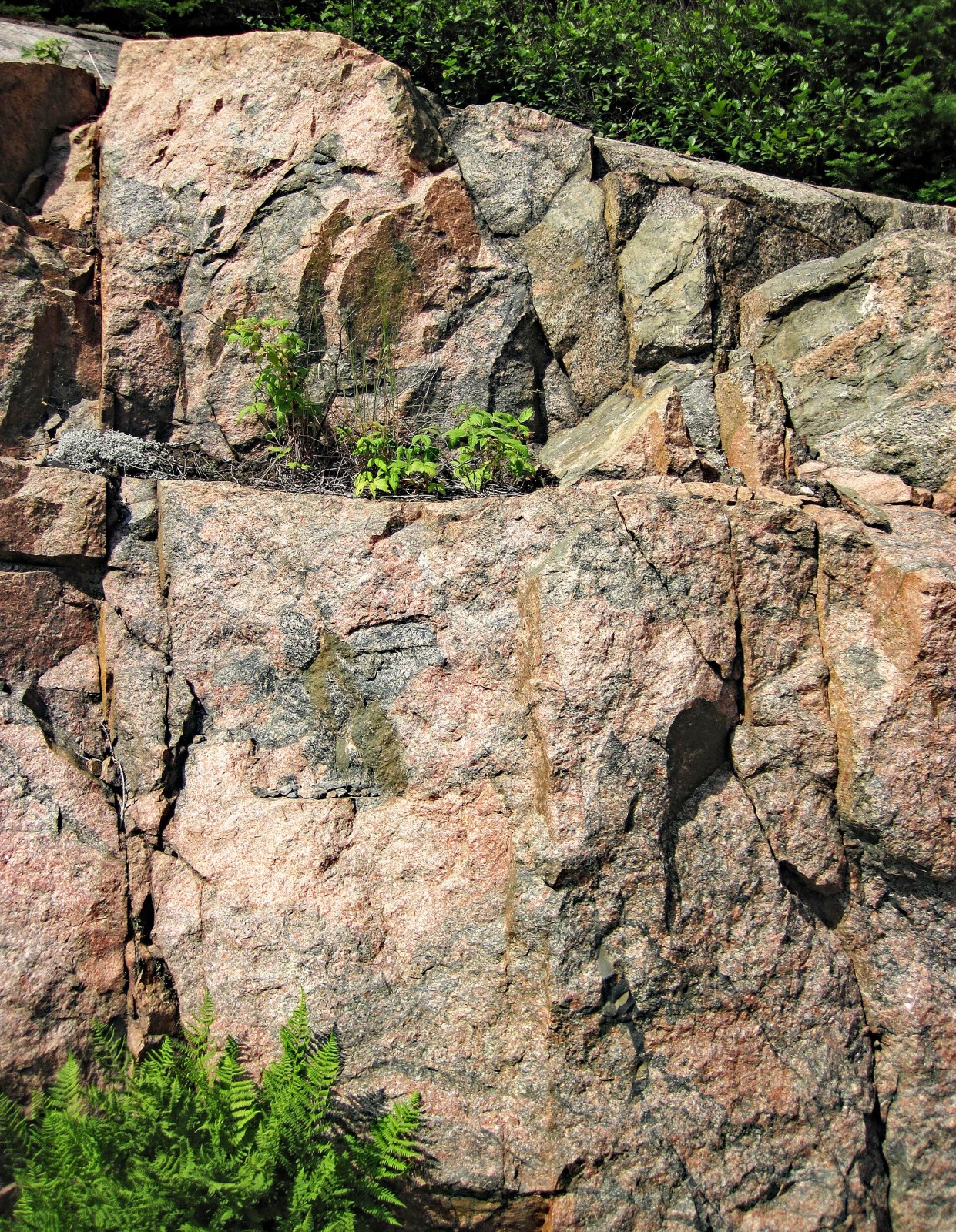
Cartier Granite (Neoarchean; 2.642 Ga; Windy Lake Northwest roadcut, Sudbury Impact Structure, Ontario, Canada) 1 (32792315457) · James St. John · Wikimedia Commons · CC BY 2.0 · Original source · CC BY 2.0 · Resized and re-encoded as JPEG; full framing preserved.