





| Input | Light radiation |
|---|---|
| Output | Electrical energy |
| Integrated into | Photovoltaic modules |
Definition and context
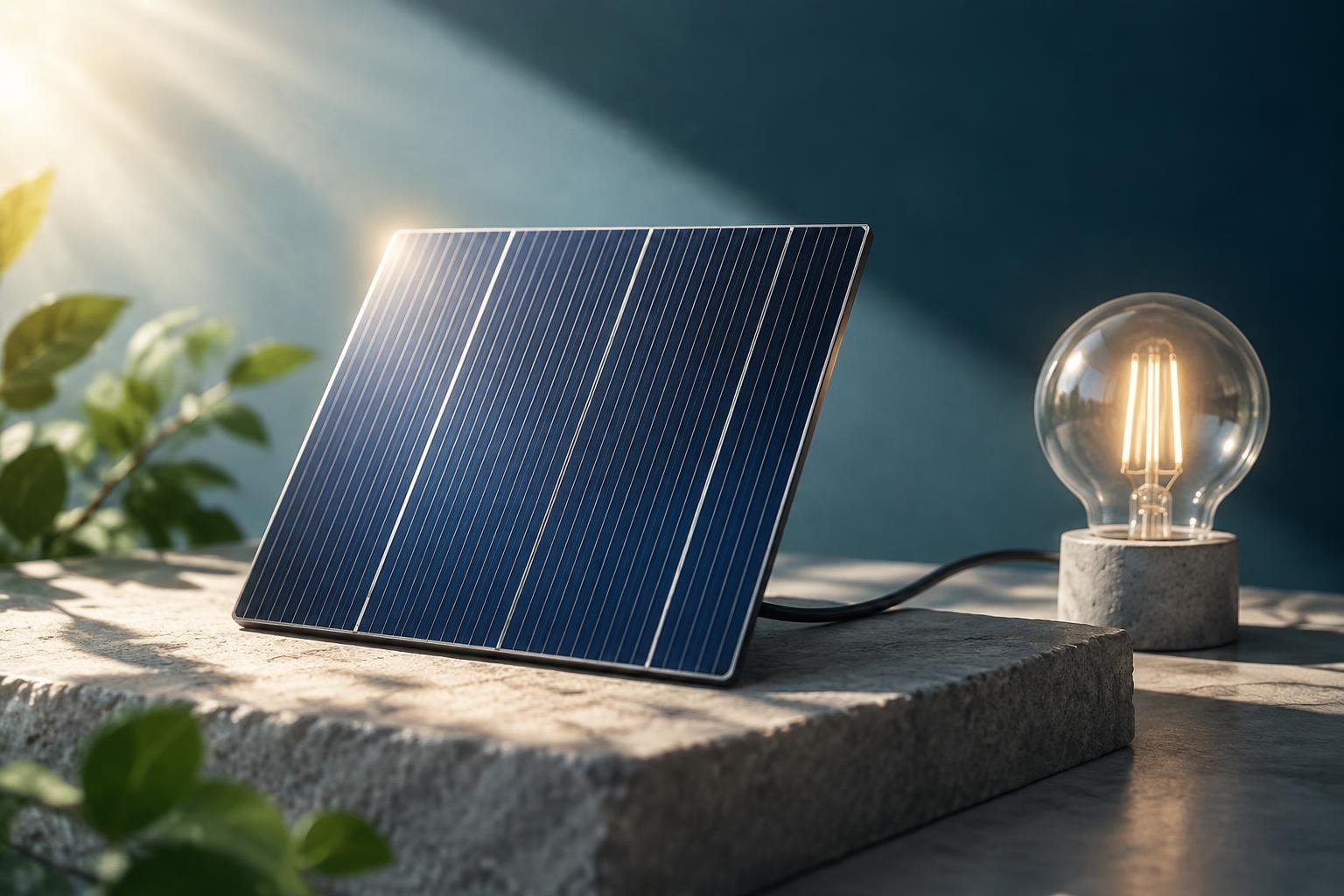
A photovoltaic cell uses a semiconductor to generate and collect charge carriers from light. The current produced depends on both the device and the radiation it receives, as well as its operating conditions. Several cells can be integrated into a module.
An image of an isolated cell is useful for understanding the principle, but an installation adds connections, protections, and electronics. If we find an efficiency percentage, we should check what level it refers to and how it was measured. A small experimental cell and an outdoor-use module are not interchangeable objects. This distinction makes it possible to assess a laboratory advance without attributing properties to it that still need to be demonstrated in other tests.
What we know and its limits
Introductory reference sheet. Properties and applications depend on measurement conditions; consult the sources before making comparisons.
Follow the evidence
The original sources for exploring this explanation and its limits.
- Solar Photovoltaic Cell Basics
U.S. Department of Energy
Photovoltaic conversion and semiconductor families. - Photovoltaic Cell and Module Design
U.S. Department of Energy
Difference between a cell and a module and device design.
Image credits
SciClue · AI-generated illustration (OpenAI) · Original source · Recurso editorial de SciClue · generado con IA