





| Observations | Seismic wave records |
|---|---|
| Makes it possible to study | Sources and internal structure |
| Requires | Models, instrumentation, and uncertainty analysis |
Definition and context
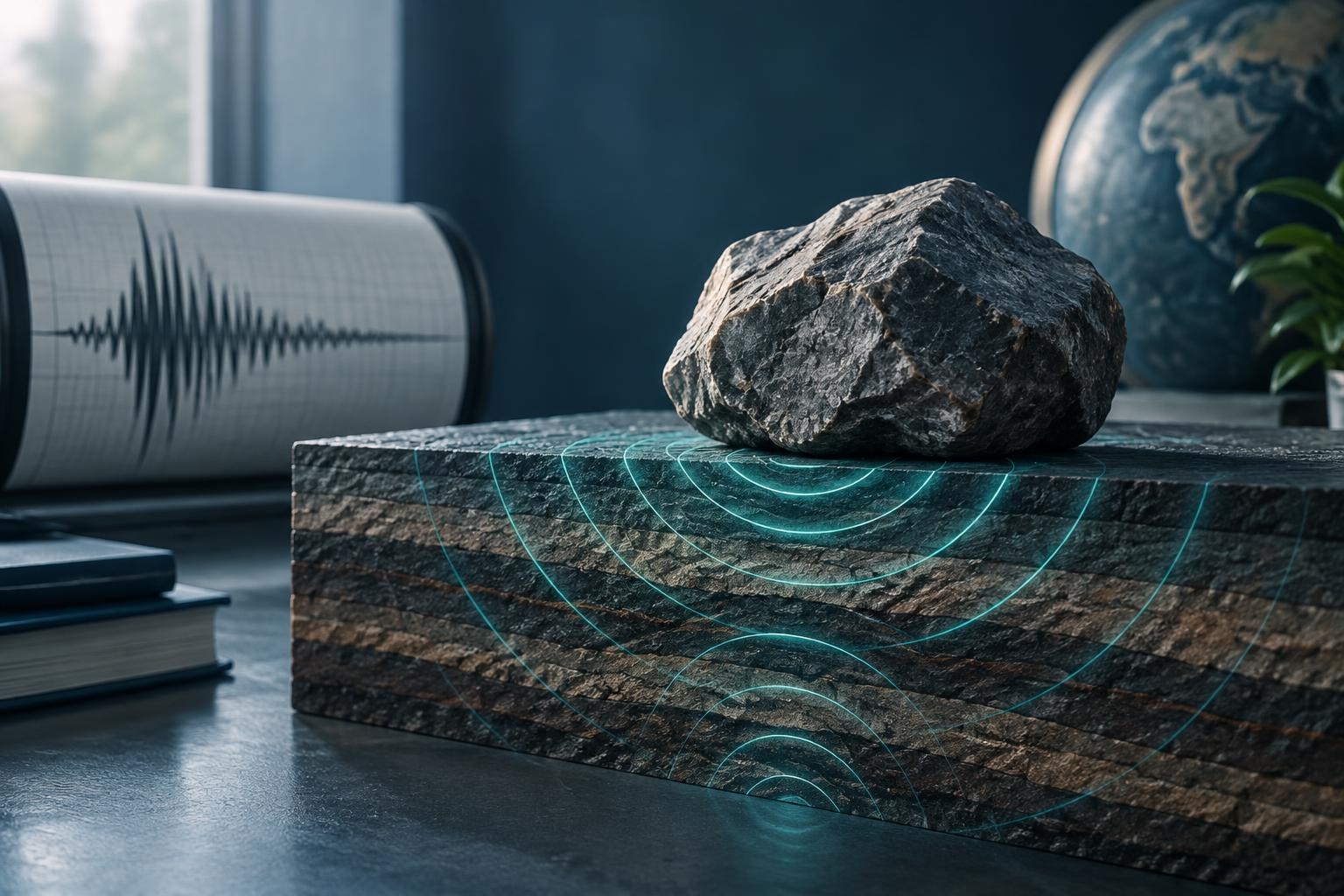
Seismology uses wave records to investigate earthquakes and properties of Earth's interior. Arrival times and signal shapes contain information about the source and the materials the waves pass through. Interpreting them requires models and multiple observations.
We can understand its logic by comparing predictions: if two internal models produce different signals, a network of records helps test them. This conceptual example does not replace professional work with instruments, uncertainties, and three-dimensional structures. A single trace rarely captures all the information needed. This fact sheet presents seismology as a means of inference: measuring from the surface can place concrete limits on regions we cannot visit directly.
What we know and its limits
Introductory reference sheet. Properties and applications depend on measurement conditions; consult the sources before making comparisons.
Follow the evidence
The original sources for exploring this explanation and its limits.
- The Interior of the Earth
U.S. Geological Survey
Seismic and experimental evidence about Earth's layers. - University Physics Volume 1 · Wave Speed on a Stretched String
OpenStax · Rice University
Dependence of propagation on the properties of the medium.
Image credits
SciClue · AI-generated illustration (OpenAI) · Original source · Recurso editorial de SciClue · generado con IA