





| Key use | Photovoltaic cells and electronics |
|---|---|
| Depends on | Composition, structure, and temperature |
| Is not equivalent to | Finished device |
Definition and context
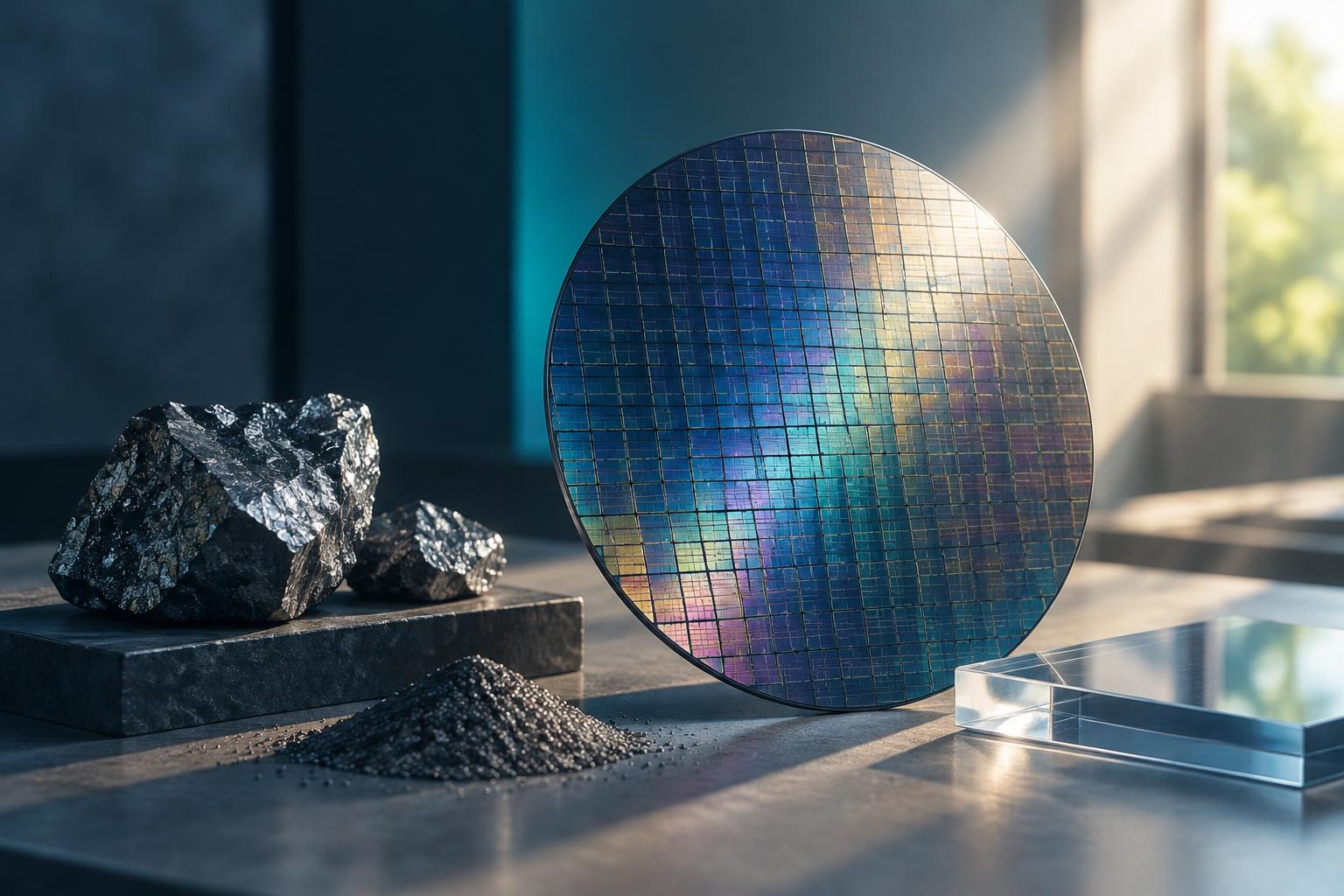
A semiconductor has electronic properties that differ from those of a good metal conductor and an insulator. Its behavior depends on the material’s structure and on conditions such as composition and temperature. Some semiconductors are used to convert light into electricity.
In a solar cell, absorbing radiation is not enough: charge carriers must also be separated and collected. The device’s structure performs this function. When comparing materials, it is helpful to ask which property is being measured and in which device it appears. A favorable result in a sample does not automatically demonstrate an efficient cell, a stable module, or viable manufacturing. Material, cell, and system are related levels of analysis that require their own tests.
What we know and its limits
Introductory reference sheet. Properties and applications depend on measurement conditions; consult the sources before making comparisons.
Follow the evidence
The original sources for exploring this explanation and its limits.
- Solar Photovoltaic Cell Basics
U.S. Department of Energy
Photovoltaic conversion and semiconductor families. - Photovoltaic Cell and Module Design
U.S. Department of Energy
Difference between a cell and a module and device design.
Image credits
SciClue · AI-generated illustration (OpenAI) · Original source · Recurso editorial de SciClue · generado con IA