





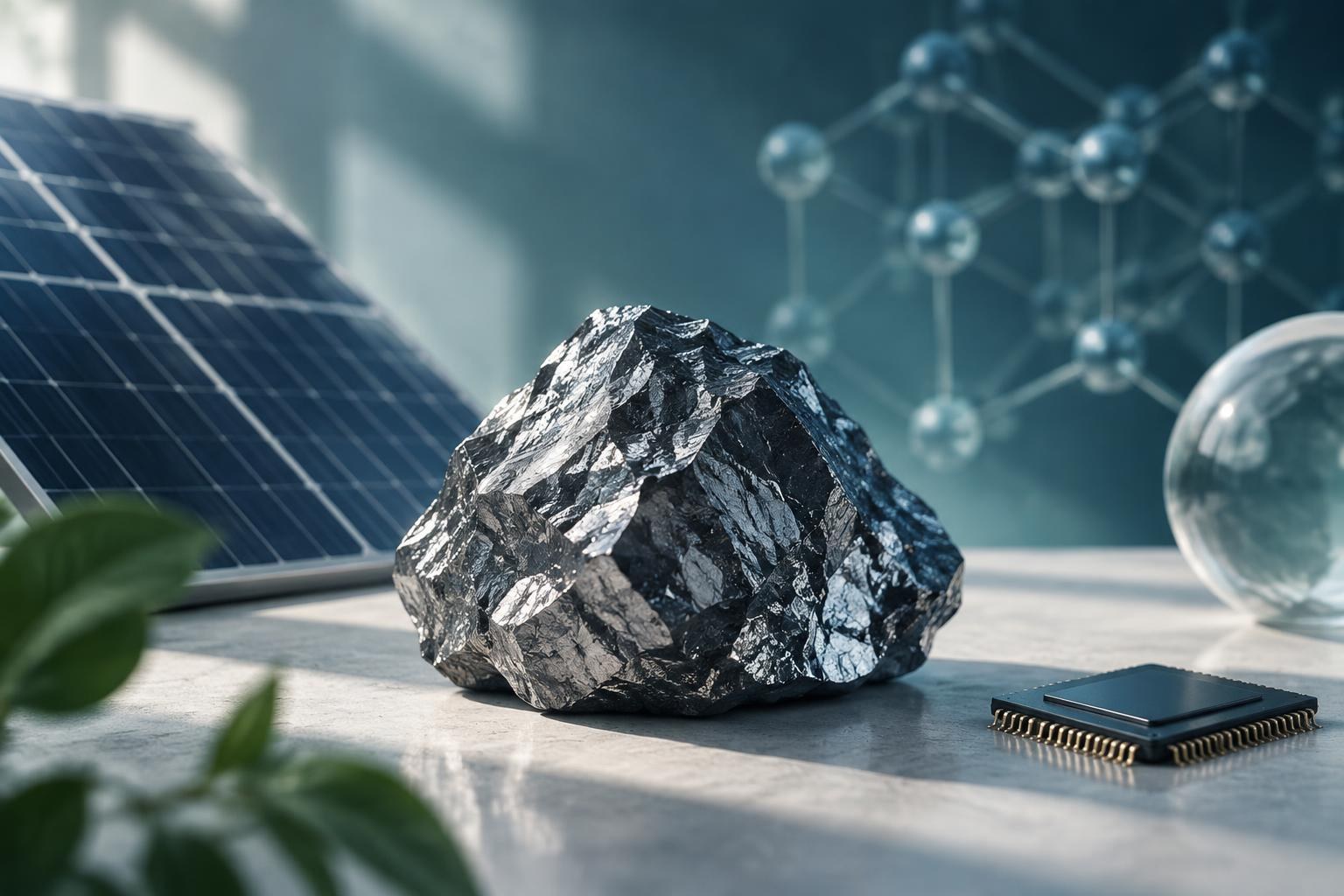
| Chemical symbol | Si |
|---|---|
| Use | Semiconductors |
| In photovoltaics | It is part of different cell architectures |
Definition and context
Silicon is a chemical element that can form crystalline structures useful in semiconductor devices. Its presence in a technology does not, by itself, describe the purity, structure, or manufacturing process of the material used.
In photovoltaics, talking about silicon identifies an important family of devices, but does not replace a performance specification sheet. Two modules that share this material may differ in design, surface area, connections, and thermal behavior. To understand a comparison, it is helpful to distinguish the identity of the element from the properties of the finished device. This sheet does not assign silicon a single efficiency: conversion depends on how it is used and the conditions under which it is measured.
What we know and its limits
Introductory reference sheet. Properties and applications depend on measurement conditions; consult the sources before making comparisons.
Follow the evidence
The original sources for exploring this explanation and its limits.
- Solar Photovoltaic Cell Basics
U.S. Department of Energy
Photovoltaic conversion and semiconductor families.
Image credits
SciClue · AI-generated illustration (OpenAI) · Original source · Recurso editorial de SciClue · generado con IA