





Key ideas
- The RSC presents editable packages, support for scientific literacy, and chemistry materials with examples by topic and age; its general and secondary education pages are views of the same catalog.
- IUPAC offers a periodic table whose latest version identified on the page is dated May 4, 2022, as well as annual selections of emerging technologies.
- The proposed activity teaches students to distinguish evidence from interpretation when comparing pages; it involves reading and record-keeping, not experiments.
Choose Based on the Classroom Question
A resource can be useful for exploring chemical concepts and language, looking up element data, or introducing emerging technologies. The choice depends on the question you want to explore and the type of material each page offers. The Royal Society of Chemistry (RSC) presents editable packages for preparing, teaching, assessing, and enriching instruction, along with support for scientific literacy. Examples it lists include materials about atoms, molecules, and elements for ages 11–14, and about alkenes for ages 14–16. Its general page also describes resources for primary, secondary, and higher education, as well as videos and practical activities (RSC: Chemistry resources).
The RSC’s secondary education section advertises more than 2000 resources and a curriculum explorer for finding materials related to a specification. It includes examples by topic and age, such as those about atoms, molecules, and elements for ages 11–14, and alkenes for ages 14–16. This section and the general page are two views of the same organization’s catalog, not independent checks. In addition, the general page shows a different figure—more than 1800 resources in the secondary education description—so it is prudent not to combine the two figures as though they were a single count or a review of the complete catalog (RSC: Secondary resources).
To look up information about the elements, IUPAC offers a periodic table. The page states that the latest version identified there is dated May 4, 2022, and includes the latest abridged values for standard atomic weights published by the Commission on Isotopic Abundances and Atomic Weights (CIAAW), compiled as part of the 2021 table of standard atomic weights. The date identifies the version described; it does not allow us to claim that all its values have been updated in 2026 (IUPAC: Periodic Table of Elements).
Another option is to use IUPAC’s page about the Top Ten Emerging Technologies in Chemistry to start a conversation about applications and developments in chemistry. The initiative publishes selections by year. IUPAC describes emerging technologies as those lying between a new scientific discovery and a fully commercialized technology, selected for their potential to open up opportunities in chemistry and other fields. This is an institutional selection, not a school course or proof that every technology has been universally adopted. The page notes that the 2026 finalists were published on November 14 of that year and that an article about each technology would appear in the January 2027 issue of the journal Chemistry International (IUPAC: Emerging Technologies in Chemistry).
Comparative Directory
| Resource | What the page describes | Suggested use | Scope of the available information |
|---|---|---|---|
| Editable packages, support for scientific literacy, videos, and practical activities; includes examples by topic and age. | Search for a topic, format, or education level. | The general page presents resources for primary, secondary, and higher education. | |
| More than 2000 resources, editable packages, and a curriculum explorer. | Find chemistry materials for secondary education and relate them to a specification. | It is a view of the RSC catalog, not an independent source from the general page. | |
| Periodic table and description of the version dated May 4, 2022. | Look up elements and information associated with that version. | The page identifies the edition and explains that it includes abridged standard atomic weight values published by CIAAW. | |
| Annual selections of emerging technologies in chemistry. | Start a conversation about developments and applications. | The selection alone does not demonstrate universal adoption. |
The comparison summarizes what the landing pages state; it does not mean that all linked materials have been reviewed. The pages consulted are in English. The information provided does not allow us to confirm the availability of translations, download conditions, registration requirements, file licenses, or accessibility. The presence of a link to a material does not in itself amount to permission to copy or distribute it.
A Reading and Comparison Activity
The following activity uses pages and texts; it requires no reagents, heating, or experiments. The teacher can adjust the reading load for the group. The aim is to distinguish what the page states from the interpretation built from it.
- Choose a question. In pairs, choose a page from the directory and formulate a question that can be answered by reading its content. For example: “What types of materials does this catalog describe?” or “What date identifies the version of the periodic table described by IUPAC?” Write down the page title and the question.
- Separate evidence and interpretation. On a worksheet, record a short relevant sentence or piece of data and its location. In another column, write what interpretation you make of that evidence. Add a third column: “What does this page not allow us to conclude?” This helps avoid confusing a description of the resource with a broader conclusion.
- Compare two pages. State what purpose or content each page describes, what specific information supports the comparison, and what would be needed to compare the complete materials. If you choose the two RSC pages, keep in mind that they are views of the same catalog and not independent sources.
| Page or resource | Question | Evidence observed and location | Interpretation | What it does not allow us to conclude |
|---|---|---|---|---|
To wrap up, each pair can share a conclusion and identify which part comes directly from the text and which is interpretation. The table is a template for recording the reading; it does not assess the accuracy of all linked materials.
What to Check Before Assigning a Page
Before class, it is worth checking that the specific resource is still available and addresses the proposed question. You can also review aspects such as keyboard navigation, visual contrast, reading load, and the connectivity required. These are selection criteria, not verified accessibility features of the cited pages. Since the pages are in English, language comprehension may also affect their use.
The catalogs include links to videos, downloads, and practical activities, but the presence of a practical activity does not amount to permission to conduct it in the classroom. This activity is limited to reading and comparison. Any experimental work would require teacher planning, risk assessment, school rules, and appropriate equipment; a directory does not replace those processes or the teacher’s judgment. The selection of pages is also not exhaustive and does not replace the curriculum.
What we know and its limits
The guide is based on four English-language RSC and IUPAC landing pages, not on an exhaustive review of the linked materials. Translations, downloads, registration requirements, file licenses, and accessibility have not been verified. The periodic table version described is dated May 4, 2022; we do not claim that all its values have been updated in 2026. The selection of emerging technologies does not by itself demonstrate universal adoption of the technologies mentioned. The activity does not replace the curriculum, teacher judgment, or the planning and risk assessment required for any practical activity.
Original sources4
The original sources for exploring this explanation and its limits.
-
Chemistry teaching resources
Royal Society of Chemistry
Primary resource consulted for the original educational directory; landing page, not a verification of all linked files or practical proposals. -
RSC secondary chemistry resources
Royal Society of Chemistry
Primary resource consulted for the original educational directory; landing page, not a verification of all linked files or practical proposals. -
Periodic Table of Elements
International Union of Pure and Applied Chemistry
Primary resource consulted for the original educational directory; landing page, not a verification of all linked files or practical proposals. -
Top Ten Emerging Technologies in Chemistry
International Union of Pure and Applied Chemistry
Primary resource consulted for the original educational directory; landing page, not a verification of all linked files or practical proposals.
Image credits
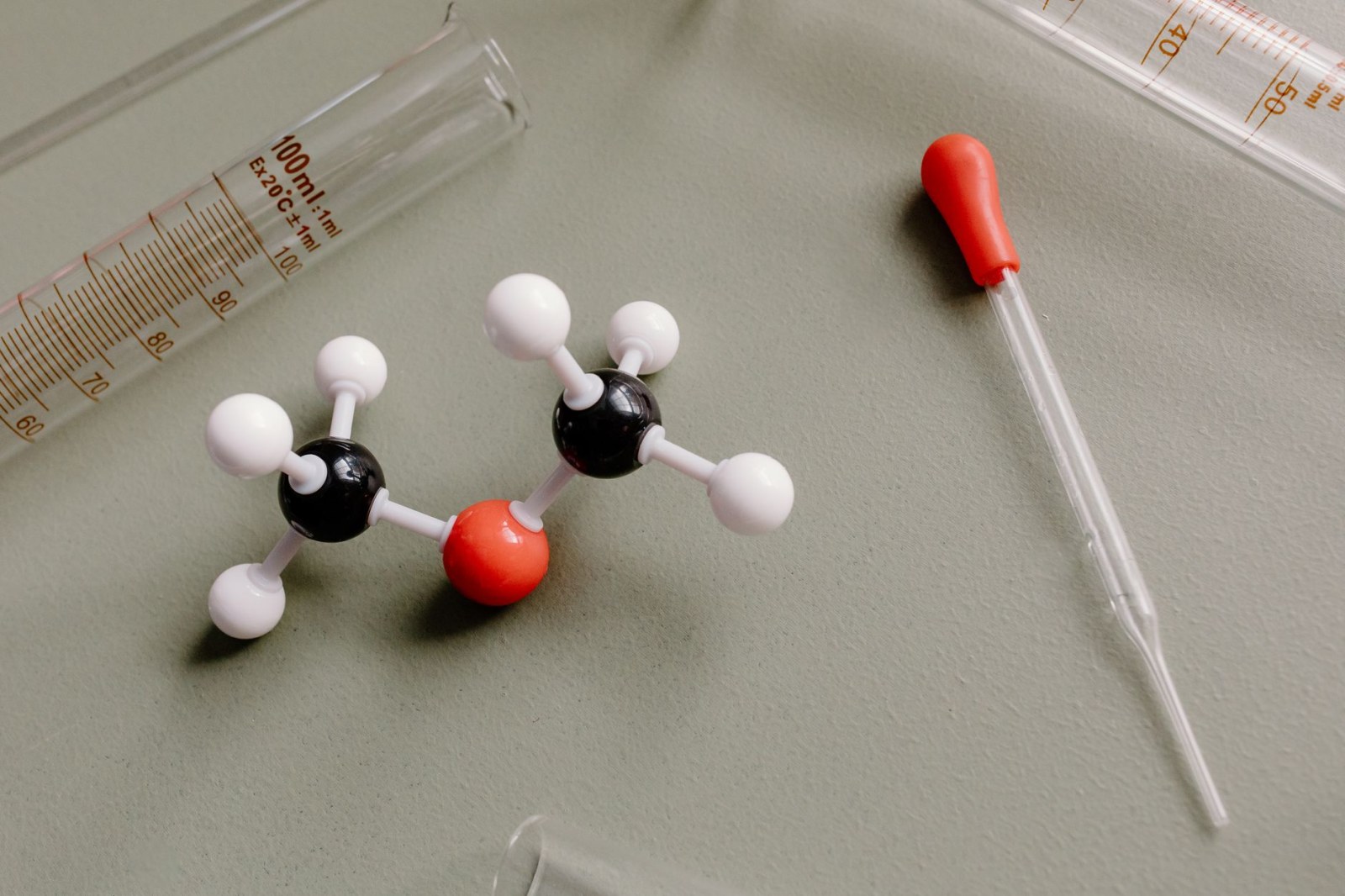
Close-up of laboratory equipment and molecular model on a flat surface. · Photo by Tara Winstead on Pexels · Original source · Pexels License · Resized and re-encoded as JPEG; full framing preserved.