





Key ideas
- Science Journal for Kids and Teens offers versions of varying complexity in a specific collection, not necessarily for all its articles.
- Distinguishing an adaptation, a news article, and an original study helps trace what was measured and what conclusions the evidence supports.
- A shared scientific question can be paired with different reading supports and a separate assessment of comprehension and reasoning.
One Common Question, Different Supports
Before choosing a reading, define the science objective: what question the group should understand and how it relates to the topic they are working on. Then examine the vocabulary load, sentence length, prior knowledge required, and complexity of the figures. Choose content suited to the age group and classroom context; adjust the reading difficulty without infantilizing the topic or removing scientific caveats.
As a possible way to organize the work, in elementary school you could do a shared reading with a glossary; in secondary school, compare versions and justify a conclusion using a figure; and, with advanced readers, compare methods and limitations with the original study. These are flexible supports that teachers adapt after observing students’ comprehension, not official equivalencies between ages and levels or a program with demonstrated efficacy.
Science Journal for Kids and Teens brings together a collection of articles with upper and lower versions of the same adapted article, as well as questions and suggested activities. This organization does not indicate that all texts in its catalog are available at two levels. The FAQ distinguishes four school categories: elementary school, middle school, lower high school, and upper high school. These labels do not automatically translate into the ages or grade levels used in other countries. They can therefore serve as a reference, but not as universal equivalencies or a measure of intelligence.
One way to preserve the science objective is to pose the same question to the whole group and vary the supports: explain vocabulary, provide a glossary, guide the reading, or offer sentence starters. When comparing two versions, students can identify which question and caveats remain the same, and which words or methodological details change. These activities are teaching suggestions, not the results of a trial on educational effectiveness.
The adaptation should not erase the difference between what was observed and what is interpreted. A simpler sentence can preserve the subject of study, method, and limits of a conclusion, even if it leaves out details that are unnecessary for the reading task. The group’s actual comprehension—and not just a platform’s level label—can guide what support to offer.
Tracing the Adaptation, News Story, and Study
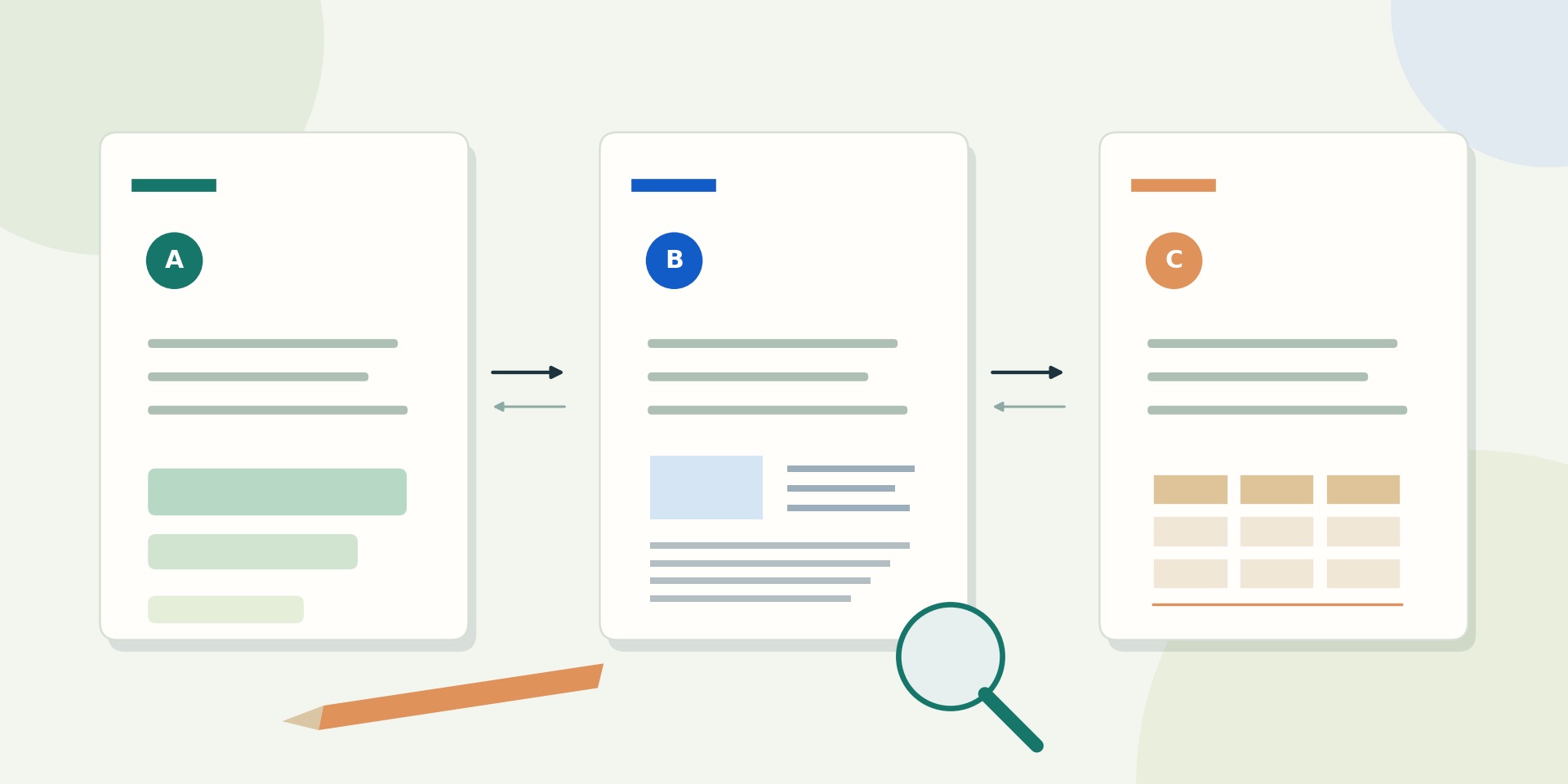
An adaptation, the news story that may have inspired it, and the original scientific article are different documents. It is worth identifying each one’s authorship and dates, and following the references to the academic work when available. In Newsela, MAX designates the original news story or journalistic publication, not necessarily the scientific article it reports on.
When reading a study, you can ask what was measured and by what method. If there is a figure, its axes, units, and legend help establish what it represents before interpreting it. Distinguishing the observed data, the proposed explanation, and the conclusions the material does not support helps avoid presenting an interpretation as if it were a measurement. An institutional page can provide context about a study, but it does not replace the original scientific article; likewise, several publications repeating the same news story do not, by that fact alone, constitute independent verification.
Access conditions are another aspect worth checking before assigning a reading. Newsela Lite offers a rotating selection of articles in five levels, each available for a limited period and with an indicated expiration date. For active articles, the source documents assignments, the selection or setting of levels, and responses to annotations and texts. It does not guarantee the complete catalog or the continued availability of an article. Some features, such as Binder aggregation and collections, are not available in Lite. Check the current account and license before planning.
Comparing Resources Without Confusing Their Functions
Resources do not necessarily offer the same type of text or the same supports. The table summarizes documented features; availability and conditions may change. Free access, the availability of a feature, and permission to reuse material are different matters.
| Resource | What it offers | Access and limitations |
|---|---|---|
| Science Journal for Kids and Teens | A specific collection includes upper and lower versions of the same article, questions, and suggested activities. | The content is free. The general policy indicates a CC BY license with attribution, unless otherwise noted; also check the credits for each item. |
| Newsela | Newsela Lite offers a limited rotating selection of news stories in five levels. MAX is the original journalistic publication, not necessarily the scientific article. | Lite allows some features with active articles, but does not include the premium catalog, Binder aggregation, collections, or certain exports or integrations. Availability depends on the account and license. |
| Frontiers for Young Minds | Publishes articles about discoveries and concepts, written by scientists. Young readers provide comments with the help of a science mentor; after review, an associate editor validates the article. | Reading is free. It is not a universal selector of multiple versions of the same article and does not guarantee a uniform difficulty level. |
| ReadWorks | The guide documents Article-A-Day sets with boost and challenge articles. | Consult the differentiation guide with content to view the resource and its sets. |
For Science Journal for Kids and Teens, free access does not mean that any material can be modified or redistributed without regard to its license and credits. In Newsela Lite, the selection rotates and articles expire, so it is best not to plan on the assumption that a fixed number of readings will be available. In both cases, checking the conditions before class helps avoid confusing a general description of the service with the availability of a specific text.
A Documented Example: Carbon on Mars
What can we learn from carbon on Mars? is an adaptation from May 2023 based on a 2022 study by Stern and colleagues. The page includes two versions of different complexity, the Teacher’s key, and a link to the academic article; it also offers “Download Article in Spanish.” This is an example of published research, not a new news story.
The versions describe the analysis of a Martian rock sample using SAM, aboard the Curiosity rover. A reading activity could ask the group to review the legend, axes, quantities, and units of a figure, and compare which details appear in both versions. This provides practice interpreting a scientific representation without treating its values as a measure of the probability of life or copying the figure’s data.
The central caveat is that detecting organic carbon does not prove that life exists. NASA information notes that carbon can also come from meteorites, volcanism, or other non-biological processes. This institutional news story provides context about the work, but it does not replace the original scientific article.
Reading mini-sheet: Mars
| Task or question | Suggested answer |
|---|---|
| What was analyzed, and with what instrument? | A Martian rock sample; the analysis was performed using SAM, aboard Curiosity. |
| What does the detection of organic carbon allow us to say? | That organic carbon was detected in the sample described. |
| What conclusion would be disproportionate? | Claiming that the detection proves there was life. Organic carbon can also have non-biological origins. |
| What should be consulted to better assess the interpretation? | The original study, its methods and measurements, the comparisons used, and the alternative explanations it considers. The mini-sheet does not add experimental results. |
Two original micro-adaptations can preserve the subject, instrument, and caveat. With more support: “Curiosity analyzed a sample of rock from Mars using SAM. Organic carbon was detected. This carbon can also form without life, so it does not prove that there was life.” With more independence: “The SAM instrument, aboard Curiosity, analyzed a Martian rock sample in which organic carbon was detected. Because this carbon can also come from non-biological processes, the measurement is not enough to establish that there was life.”
Separating Behavior and Interpretation
The April 2024 page How do bumble bees play? links to a 2022 study on ball-rolling by bumblebees. The study examines this behavior according to behavioral criteria for play; it does not allow direct observation of a subjective experience or demonstrate that bees feel emotions identical to those of humans. The fact that the page belongs to the same platform does not imply that it has two levels.
As a reading activity, the group can classify statements as observation (what behavior is described), interpretation (how it relates to criteria for play), or unsupported claim (for example, asserting that bumblebees feel the same as people). This is a teaching suggestion, not a replication of the experiment. It can be done with text or video without capturing or handling bees.
Reading, Discussing, and Assessing Separately
For vocabulary, students can be asked to explain organic and evidence as they are used in the text, and to refute the misconception “organic means proof of life.” For literal comprehension, they can identify the object analyzed and the method; for inferential comprehension, they can explain what conclusion the results support and what remains unproven.
In a discussion, each argument can point out what evidence supports a claim and what alternative explanations remain open. The point is not to put every opinion on the same level as a result: the discussion should attend to relevant evidence and its limits. For writing, students can draft a claim–evidence–reasoning paragraph, propose a headline proportionate to the results, and revise it by checking the source. These are teaching suggestions, not the results of a pedagogical trial or guarantees of learning.
Vocabulary comprehension and scientific reasoning are related, but they are not the same task. A qualitative rubric can assess separately whether a student understands terms in context, locates evidence, recognizes limitations, and justifies a conclusion. Descriptors such as “needs support,” “in progress,” and “justifies it” can guide feedback without turning it into a measure of intelligence. The same science question can be posed to the whole class with different supports.
Before assigning a resource, it is worth checking its topic, authorship, and dates; distinguishing the dates of the study, news story, and adaptation; reviewing methods, comparisons, units, figures, and uncertainties; and checking references, corrections or retractions, reported interests or funding, language, supports, license, and student access. A historical resource can retain value if it is dated and not presented as new. Access conditions can also change, so it is prudent to verify the available account and plan an authorized alternative.
What we know and its limits
Reading levels and school categories are indicative and do not universally correspond to ages or grades. Platform access, features, and availability may change. The examples of Mars and bumblebees correspond to dated studies and adaptations; they are not new findings. The activities described are teaching proposals, not measured efficacy results.
Original sources15
The original sources for exploring this explanation and its limits.
-
Scientific Articles in Two Reading Levels
Science Journal for Kids and Teens
Collection with versions of varying reading complexity. -
Newsela Lite (Free Account)
Newsela Help Center
Terms of free access and its limitations, updated on September 4, 2026. -
Article Actions
Newsela Help Center
Reading levels, MAX version, and reading features. -
Newsela’s Content
Newsela Help Center
Difference between the complete catalog and the free selection. -
What can we learn from carbon on Mars?
Science Journal for Kids and Teens
Teacher resource sheet with adaptation, answers, academic article, and resources. -
What can we learn from carbon on Mars? — upper reading level
Science Journal for Kids and Teens; adaptación de Stern et al.
More complex adaptation with methods, figure, glossary, and questions. -
What can we learn from carbon on Mars? — lower reading level
Science Journal for Kids and Teens; adaptación de Stern et al.
Accessible version of the same study for instructional comparison. -
NASA’s Curiosity Takes Inventory of Key Life Ingredient on Mars
NASA — Goddard Space Flight Center
Institutional context for the 2022 carbon study. -
Terms and Conditions
Science Journal for Kids and Teens
Free access to teaching content. -
Content License Policy
Science Journal for Kids and Teens
Attribution and conditions for reusing the resource. -
Differentiation with Content
ReadWorks
StepReads and differentiated texts with reading support. -
Journal — Frontiers for Young Minds
Frontiers for Young Minds
Free scientific articles prepared by researchers with youth participation. -
How do bumble bees play?
Science Journal for Kids and Teens
Second example to distinguish observation from attribution of mental states. -
Do bumble bees play?
Galpayage Dona et al.; Animal Behaviour; Chittka Lab, Queen Mary University of London
· 10.1016/j.anbehav.2022.08.013
Original open-access study on criteria for play in bumble bees. -
Frequently Asked Questions
Science Journal for Kids and Teens
Adaptation process, school categories, and reference to the original.
Image credits
Editorial Team · original educational illustration · Original source · Recurso editorial propio · derechos reservados · Original vector design of three documents connected by arrows. A: adaptation; B: news article; C: study. The marks and cells do not encode values, results, or third-party data. JPEG for web viewing; private retrievable SVG.