





Key ideas
- NASA is evaluating strawberries, cucumbers and lemon basil as potential options for providing fresh food and variety on future missions to the Moon and Mars; they are not presented as crops already established at those destinations.
- In the comparison described by NASA, the wild strawberry produced twice as many shoots, flowers and fruits as ‘Delizz’, but also too many runners; the agency keeps ‘Delizz’ as its leading candidate.
- Cucumbers could be the first representatives of the cucurbit family to be grown in space; they produced edible fruits in trials under flight conditions. Lemon basil passed a preliminary stage and still needs to be evaluated in plant pillows.
NASA is studying strawberries, cucumbers and lemon basil as potential crops for future missions to the Moon and Mars. The research seeks options that can provide fresh food, nutrition and variety far from Earth. The agency presents the three crops as candidates under evaluation, not as foods already produced at those destinations.
Crops under evaluation, not confirmed menus
Plants could contribute to life-support systems because they absorb carbon dioxide, produce oxygen and recycle water. NASA notes that these capabilities would become more important as crewed missions travel farther from Earth. The announcement does not claim that these crops have already been grown on the Moon or Mars, or that they are part of defined menus for those missions.
The agency also reports that new research by its Biological and Physical Sciences Division is scheduled to launch to the International Space Station. According to NASA, it will carry a prototype growth chamber described as the first of its kind, intended to provide information for developing crop-production systems that could be used in future lunar habitats and Mars missions. The launch is presented as a future step, not as an activity that has already taken place.
Strawberries: yield and available space
Strawberries are one of the few sweet fruits being considered for spaceflight. NASA highlights that they are nutritious, aromatic and capable of self-pollination. Researchers at NASA’s Kennedy Space Center in Florida grow them in chambers that replicate flight conditions. NASA partners from the Australian Research Council Centre of Excellence in Plants for Space are also collaborating on the study.
In a recent trial, researchers from NASA Kennedy, the University of Melbourne and the University of Western Australia compared a wild strawberry with ‘Delizz’, NASA’s leading candidate. According to the agency’s summary, ‘Delizz’ produced large, red fruits, while the wild strawberry produced small, yellow fruits because of a recessive genetic mutation.
Appearance was not the only criterion. Starting from seeds, the wild strawberry produced twice as many shoots, flowers and fruits as ‘Delizz’. Even so, NASA kept ‘Delizz’ as its leading candidate: the wild variety produced too many runners, which would take up valuable space on a spacecraft. The agency notes that the study was published in September in the journal Life Sciences in Space Research.
Cucumbers: a crop from a family not yet represented
NASA says that many crops have already been grown in space, but none so far has belonged to the cucurbit family. Cucumbers could be the first representatives of that family to be grown there. They need extensive testing before they can be grown and eaten in space. Researchers funded by the agency recently evaluated their growth, yield and nutritional value under spaceflight conditions.
According to NASA’s summary, the plants showed some signs of enlarged leaves but produced a steady supply of edible fruits. The agency links these findings to a study published in August in HortScience. No harvest quantities are specified here, and the conclusion is not that cucumbers are approved for cultivation on a space mission.
NASA suggests that offering different crops could benefit astronauts’ diets and mental well-being, as well as increase plant biodiversity. The latter could improve the chances of crop success during long-duration missions. These are potential benefits described by the agency, not results quantified for a specific mission.
Lemon basil: preliminary tests and next steps
Lemon basil is an edible herb with a citrus aroma and flavor that is being evaluated at NASA Kennedy. The agency reports that it passed a preliminary stage of testing for space crops and that its seeds underwent a sanitation process, which is necessary before flight to remove microorganisms.
The next planned step is to evaluate its growth in plant pillows, structures that can house plants aboard the space station. NASA notes that fresh herbs such as lemon basil could add variety to packaged meals and help address menu fatigue, with potential positive effects on health and performance. This evaluation is described as a future stage, not a completed result.
What is known and what remains to be tested
| Crop | Information described by NASA | Status or indicated next step |
|---|---|---|
| Strawberry | Comparison of the wild variety with ‘Delizz’; differences in fruit, production and runners | NASA keeps ‘Delizz’ as its leading candidate; cultivation on a lunar or Martian mission is not confirmed |
| Cucumber | Evaluation of growth, yield and nutrition; production of edible fruits despite some signs of enlarged leaves | Requires extensive testing before it can be grown and eaten in space |
| Lemon basil | Passed a preliminary round, and its seeds underwent sanitation | Growth evaluation in plant pillows is planned |
The comparison shows that each candidate is at a different stage and that the criteria are not identical either: for strawberries, among other aspects described, production and the space occupied by runners matter; for cucumbers, growth, yield and nutrition were evaluated; and for lemon basil, seed sanitation and a growth test that is still planned are highlighted. NASA’s announcement brings together research advances on Earth and upcoming research on the space station, but by itself does not demonstrate that these crops can sustain the food supply of future crews on the Moon or Mars.
Collaboration among institutions and teams is part of scientific research in different fields. CERN describes cooperation among countries, universities and scientists as a driver of its research, while the NSF NCSES report addresses the education and career paths of the STEM workforce in the United States. These sources provide general context on collaboration and scientific careers; they do not independently corroborate the results on space crops reported by NASA. CERN · NSF NCSES
What we know and its limits
The information describes evaluations and planned steps; it does not demonstrate that these crops have already been produced on the Moon or Mars, or that they are confirmed for future mission menus. Complete quantitative details of the trials and independent corroboration of the results reported by NASA are not provided.
Original sources3
The original sources for exploring this explanation and its limits.
Image credits
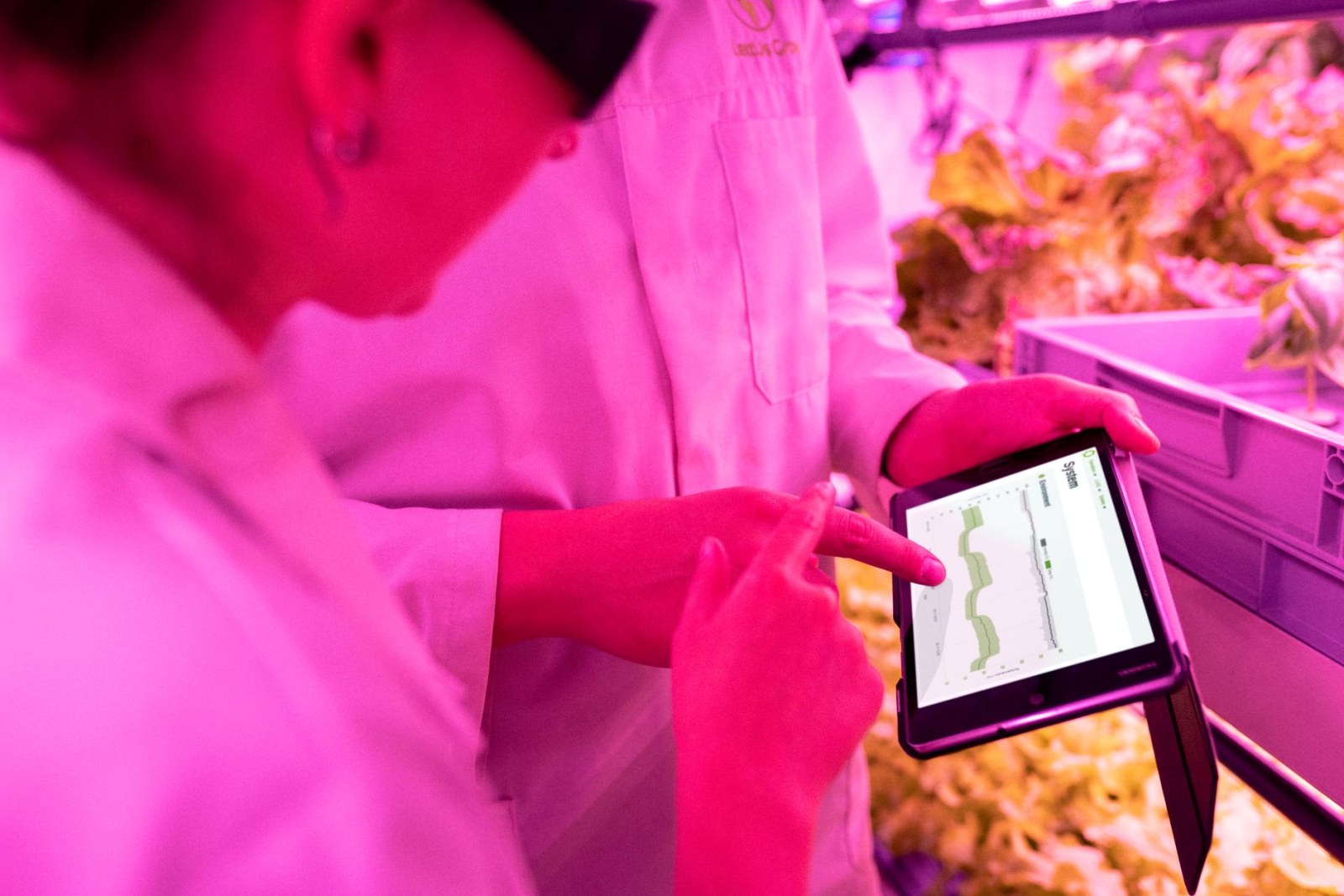
Scientists monitor crop growth in an indoor farm using digital tablets for efficient data analysis. · Photo by ThisIsEngineering on Pexels · Original source · Pexels License · Resized and re-encoded as JPEG; full framing preserved.