





Key ideas
- USGS reports that non-eruptive debris flows occurred at Mount Shasta between 2021 and 2025, affecting transportation routes and threatening municipal water supplies.
- The study distinguishes flows associated with storm rainfall from flows without precipitation associated with hot summer days in years of widespread drought and below-average winter snow.
- The findings highlight that a hazard can exist even without rain, but do not provide predictions of future events or alert thresholds.
Debris flows at Mount Shasta can pose a hazard even without rain and without an eruption. A study reported by the U.S. Geological Survey (USGS) expands the historical record of these events and distinguishes two groups according to associated weather conditions: flows triggered by rainfall during storms and flows without precipitation on hot summer days, during years of widespread drought.
A hazard beyond eruptions
Assessments of flows of water and material on snow- and ice-covered volcanoes often focus on eruption-related lahars. However, because eruptions are low-probability events, non-eruptive flows associated with precipitation or glacial outbursts could be more common, according to the context presented by the study.
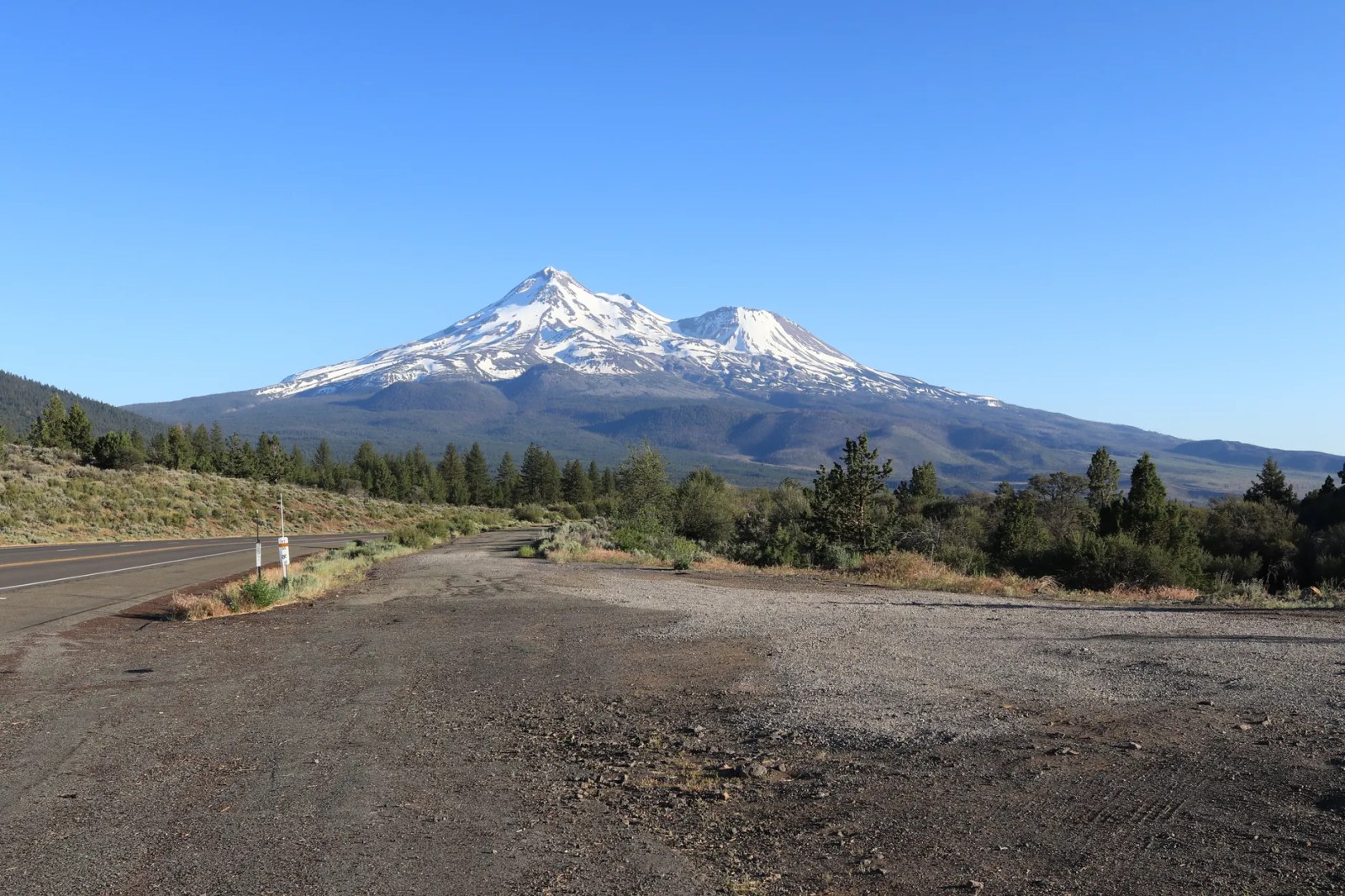
Mount Shasta is one of the southernmost glaciated stratovolcanoes in the Cascade volcanic arc. Previous hazard assessments there had focused on the possibility of larger flows triggered by eruptive activity. But between 2021 and 2025, smaller non-eruptive flows, locally called “debris flows,” were also recorded. The study notes that they had significant impacts on communities and infrastructure around the volcano: they disrupted major transportation routes and threatened municipal water supplies.
Given Mount Shasta’s current quiescent state, the authors consider it prudent to pay attention to non-eruptive lahars when assessing volcanic hazards. This does not mean that all flows have the same cause or that the study predicts when the next event will occur. According to the released summary, its aim is to expand the event record and determine whether their frequency shows a discernible relationship with broader weather conditions.
Two identified weather contexts
The study groups flows according to associated weather parameters. One category comprises events triggered by rainfall during storms. The other includes flows with no associated precipitation, occurring on hot summer days in years of prolonged drought, also characterized by below-average snow accumulation in the previous winter.
| Group described by the study | Associated conditions | Reported nuance |
|---|---|---|
| Storm-associated flows | Rainfall during storms | Precipitation is among the conditions associated with this group. |
| Flows with no associated precipitation | Hot summer days in years of widespread drought | Below-average snow accumulation in the previous winter is also noted. |
The second category broadens the monitoring framework: the absence of rain alone does not rule out the possibility of a debris flow at Mount Shasta. The summary does not claim that heat or drought, on their own, are proven causes; it describes weather conditions associated with a group of events. This distinction matters for interpreting the finding without turning an observed relationship into a broader causal explanation than the reported information supports.
An expanded record and local observations
The authors indicate that their results are consistent with historical anecdotal observations by local residents: according to these observations, flows outside precipitation events would be more frequent during hot, dry summers. The study presents this as consistency between its results and local accounts, not as independent confirmation or as a measurement that replaces analysis of the historical record.
Expanding the record and recognizing more than one weather context can provide information for assessing which conditions might accompany an increase in occurrence. The paper notes that these data are relevant given ongoing changes in weather patterns in Northern California, and also for considering hazards at other snow- and ice-covered volcanoes. This potential relevance does not mean that the results from Mount Shasta automatically apply to other volcanoes: the summary does not detail validation at other locations.
The NSF describes in general terms how it supports scientific and engineering research through grants and other resources. This information provides institutional context about support for research, but does not confirm USGS’s specific findings or establish in the supplied material that NSF funded this study.
For its part, the NSF page on materials research describes programs devoted to the properties and applications of materials. That field is distinct from the geological topic discussed here and provides no evidence for the findings about Mount Shasta.
Implications for hazard assessment
The study’s practical message is that assessment of debris flows at Mount Shasta should not be limited to eruptive scenarios or events involving rain. The summarized documentation identifies both storm-associated flows and events without precipitation during hot, dry summers, and notes that recent events affected infrastructure and communities. It does not, however, offer predictions of dates, estimates of future probabilities, or weather thresholds for issuing alerts.
The publication cited by USGS is by Ball and Hotovec-Ellis, from 2026, in the Journal of Applied Volcanology, volume 15, article 18, 23 pages.
What we know and its limits
The available information summarizes weather associations and historical background, but does not provide detailed methods, probability estimates, alert thresholds, or timing predictions. The possible application to other snow- and ice-covered volcanoes is not presented as validated for each location.
Original sources3
The original sources for exploring this explanation and its limits.
- Studies and Results: How NSF Supports Research NSF
-
How research into materials is organized and what it produces
NSF
Institutional reference for context. It does not constitute independent confirmation of the main source's findings. - Non-eruptive debris flows at Mount Shasta: Historical record, drivers, and implications for future hazards USGS
Image credits
Majestic Mount Shasta with snowcapped peaks against a clear blue sky in northern California. · Photo by EJ Merl on Pexels · Original source · Pexels License · Resized and re-encoded as JPEG; full framing preserved.