





Key ideas
- On November 8, 2026, NASA announced a Lunar Base student challenge with a million dollars in prizes.
- The call is aimed at teams of U.S. high school and higher education students and includes six design categories.
- Registration through NASA STEM Gateway is open until January 25, 2027.
NASA announced a student call on November 8, 2026, to develop proposals related to its Lunar Base project. The challenge offers a million dollars and is aimed at teams of students from U.S. high schools and higher education institutions, according to the agency. Registration will remain open until January 25, 2027; therefore, the announcement describes an ongoing call, not results already achieved.
The competition asks for designs in six areas related to operations on the lunar surface: power generation and storage, construction, life support systems, mobility, communications, and astronaut safety. NASA presents the initiative as an opportunity for participants to develop conceptual proposals and skills relevant to the aerospace sector, even without prior experience in engineering or technical fields.
A call linked to human presence on the Moon
The agency places the challenge within its plans to establish a Lunar Base near the lunar South Pole, where astronauts would live, work, and explore. The program’s institutional page describes phased development, with crewed and uncrewed missions and the gradual construction of infrastructure to support a lasting human presence. That context explains why the call encompasses everything from power and construction to safety, but does not in itself demonstrate that student proposals will be incorporated into the base.
NASA suggests that the capabilities and operational experience gained on the Moon could help prepare for future human missions to Mars. It also notes that the South Pole region offers opportunities for exploration and research and could contain resources useful for future expeditions. This is a planning perspective: the available material does not specify which challenge proposals will be selected or which technologies might be tested or deployed.
Six areas for designing solutions
The competition categories cover different needs for an operation on the lunar surface. The call presents them as problems for teams to develop solutions for, not as systems that have already been built or validated. The table summarizes these areas and their general relationship to living and working on the Moon, as conveyed in NASA’s description.
| Challenge area | Relationship to lunar operations according to the call |
|---|---|
| Power generation and storage | Provide and conserve power for activities on the surface. |
| Construction | Design solutions related to the base’s infrastructure. |
| Life support systems | Address the needs of people who would live and work there. |
| Surface mobility | Facilitate travel across the lunar terrain. |
| Communications networks | Address communications associated with operations. |
| Astronaut safety | Consider the protection of people on the surface. |
NASA states that the work may include comparative studies, conceptual proposals, and presentations to stakeholders. It adds that the challenge is open to participants with technical, vocational, and diverse academic backgrounds, and that no prior experience in engineering or technology is required. The available information does not detail the evaluation criteria, specific phases, allocation of the million dollars, or number of teams that will receive awards.
Challenge registration and organization
Teams must register through the NASA STEM Gateway platform, available in English, before January 25, 2027. NASA says its Office of STEM Engagement designed the challenge in collaboration with the Lunar Base program. It is managed by the Institute of Competition Sciences under a contract with NASA’s Center of Excellence for Collaborative Innovation, which is part of the agency’s Science and Technology Mission Directorate.
The announcement attributes a dual purpose to the challenge: to build technical skills among future aerospace professionals and gather new concepts for the Lunar Base. However, the call is not an independent evaluation of those concepts and does not confirm that they will be integrated into missions. The general Lunar Base page presents the program as a gradual effort, while the Commercial Lunar Payload Services initiative focuses on commercial services to deliver scientific, exploration, and technology payloads to the lunar surface and orbit. These are institutional references that help place NASA’s lunar activities in context, but they do not independently corroborate the details of the student challenge.
References
What we know and its limits
The information comes from a NASA announcement and two institutional context pages; the latter do not independently corroborate the details of the call. The available material does not specify the evaluation criteria, challenge phases, allocation of the million dollars, or results, and does not make it possible to determine whether student proposals will be tested or incorporated into the Lunar Base.
Original sources3
The original sources for exploring this explanation and its limits.
- NASA allocates one million dollars to the Moon Base student challenge NASA
-
Moon Base: objectives, components, and program status
NASA
Institutional reference for context. It does not constitute independent confirmation of the main source's findings. -
Commercial Lunar Payload Services
NASA
Institutional reference for context. It does not constitute independent confirmation of the main source's findings.
Image credits
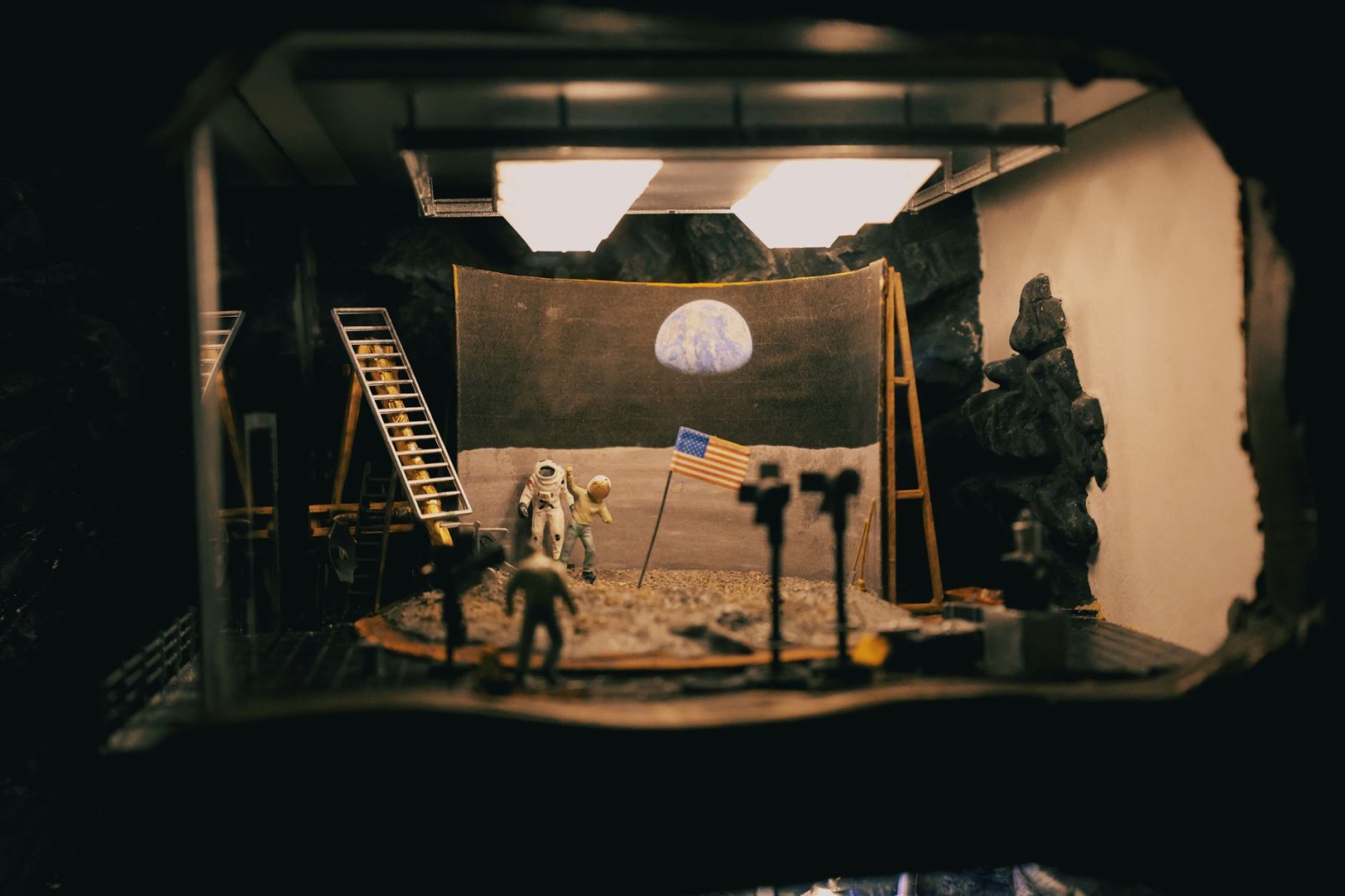
A creative diorama depicting the moon landing with astronauts and flag in a studio setup. · Photo by gu evary on Pexels · Original source · Pexels License · Resized and re-encoded as JPEG; full framing preserved.