





Key ideas
- EPA focuses its national strategy on strengthening the U.S. municipal solid waste recycling system and lists challenges related to information, infrastructure, markets, and measurement.
- The agency says recycling alone is not enough to achieve a circular economy: source reduction, reuse, and product redesign are also needed.
- Sustainable materials management broadens the focus to the life cycle; institutional webpages provide context, but neither an independent evaluation nor quantified results of the strategy.
What the Strategy Aims to Strengthen
The U.S. Environmental Protection Agency’s (EPA) National Recycling Strategy, published in November 2021 according to the agency’s website, focuses on improving and advancing the national municipal solid waste (MSW) recycling system. It identifies strategic objectives and actions led by various stakeholders to build a stronger, more resilient, and cost-effective system. EPA notes that the strategy reflects the work of public-sector actors, businesses, nongovernmental and community organizations, as well as input from other federal agencies, states, tribes, and local governments. EPA: National Recycling Strategy
That scope matters: the strategy is not presented as a plan to transform the entire economic model on its own, but as an intervention focused on municipal waste recycling. Its collaborative predecessor was the National Framework for Advancing the U.S. Recycling System, work on which began in 2018 and which was published in November 2019. EPA’s website describes participation by organizations from various sectors and levels of government in identifying actions to address the system’s challenges.
The agency also indicates that the strategy is under review to determine how it aligns with the current Administration’s priorities and what the future direction of this work will be. That note provides context about the program’s institutional status, but does not in itself provide results on system performance or report specific changes to the planned actions.
Obstacles Identified by EPA
The strategy’s webpage lists four challenges facing MSW recycling in the United States: confusion about which materials can be recycled; infrastructure that has not kept pace with a diverse and changing waste stream; limited markets for recycled materials; and varying methodologies for measuring system performance. EPA presents the strategy’s actions as responses to these challenges, supported by stakeholder collaboration that had been underway since the 2019 framework. EPA: National Recycling Strategy
These obstacles relate to different aspects of the system. Confusion about accepted materials concerns the information that guides sorting and collection. Infrastructure refers to the system’s capacity to manage changing and diversifying waste streams. Markets affect the outlet for recovered materials, while measurement methodologies shape how performance is described and compared. The source identifies these problems, but the available excerpt does not quantify their scale or establish which factor matters most or how much each action would improve recycling.
Sustainable materials management offers a broader framework for understanding why recovery does not begin or end at a sorting facility. EPA defines it as a systematic approach to using and reusing materials more productively throughout their life cycles. Its objectives include using fewer materials, reducing toxic substances and environmental impacts over the life cycle, and conserving enough resources for present and future needs. EPA: Sustainable Materials Management Basics
Recycling Is One Part, Not the Entire System
EPA describes the circular economy as a model that keeps products and materials in circulation for as long as possible. In contrast to a sequence in which resources are extracted, made into products, and then become waste, the circular approach seeks to reduce material use, redesign products to require fewer resources, and recover materials for use as inputs in new products. EPA: Circular Economy: How It Changes the Use of Resources
From this perspective, recycling plays an important role, but it is not the same as full circularity. EPA explicitly states that advancing MSW recycling will not be enough to achieve a circular economy in the United States. Areas the strategy does not address are also necessary, such as product redesign, source reduction, and reuse. This distinction avoids attributing a broader scope to a sector-specific strategy than the agency itself declares. EPA: National Recycling Strategy
The same webpage clarifies that recycling efforts in the United States encompass more than processing MSW at materials recovery facilities: it mentions, among other streams, electronics, textiles, cement, concrete, and food waste. The excerpt does not detail how these materials are integrated into the strategy’s actions, so it cannot be assumed that all receive the same treatment or are covered in equal depth.
| Aspect | What EPA Indicates | Scope of What Is Described |
|---|---|---|
| Target system | National municipal solid waste (MSW) recycling | The strategy’s stated focus |
| Identified challenges | Confusion about materials, lagging infrastructure, limited markets, and varying measurements | Problems listed; no figures in the excerpt |
| Actions needed beyond recycling | Redesign, source reduction, and reuse | Areas EPA identifies as necessary and not addressed by the strategy |
| Other materials mentioned | Electronics, textiles, cement, concrete, and food waste | Examples included in the broader picture of recycling in the United States |
What a Life-Cycle Perspective Adds
The sustainable materials management framework helps broaden the question: in addition to how much is recycled, it matters how materials are extracted, designed, used, and managed at the end of their useful lives. EPA notes that examining a product’s life cycle can reveal opportunities to reduce impacts, conserve resources, and lower costs. As an example, it describes products that could be redesigned to be made with different materials, in smaller quantities, with less-toxic materials, or to be more durable; they could also be designed to be easily disassembled at the end of their useful lives. EPA: Sustainable Materials Management Basics
The circular economy webpage adds that EPA links this approach to reducing negative life-cycle impacts, reducing the use of harmful materials, and decoupling material consumption from economic growth. It also notes concerns about the environmental and health effects of a non-circular economy and describes institutional initiatives related to infrastructure, education, and the management of batteries and electronics. These references provide context for the agency’s general direction; they do not constitute an independent evaluation of the national recycling strategy or, on their own, demonstrate its results. EPA: Circular Economy: How It Changes the Use of Resources
Taken together, EPA’s approach positions recycling as a necessary tool within a broader transition. The strategy addresses specific challenges in the municipal system and depends on coordination among multiple actors, while a circular economy also requires decisions about design, consumption, reuse, and materials management throughout the life cycle. The available institutional information explains this framework and its limits, but does not provide a quantitative evaluation of the effects achieved.
What we know and its limits
The information comes from EPA institutional webpages. The available material describes objectives, challenges, and context, but does not quantify the scale of the problems or evaluate the strategy’s results; the contextual references do not constitute independent corroboration. EPA indicates that the strategy is under review to determine its alignment with current priorities and the future direction of the work.
Follow the evidence
The original sources for exploring this explanation and its limits.
- Circular Economy: How Resource Use Changes EPA
-
Sustainable materials management basics
EPA
Institutional reference for context. It does not constitute independent confirmation of the main source's findings. - Recycling systems and the transition to the circular economy EPA
Image credits
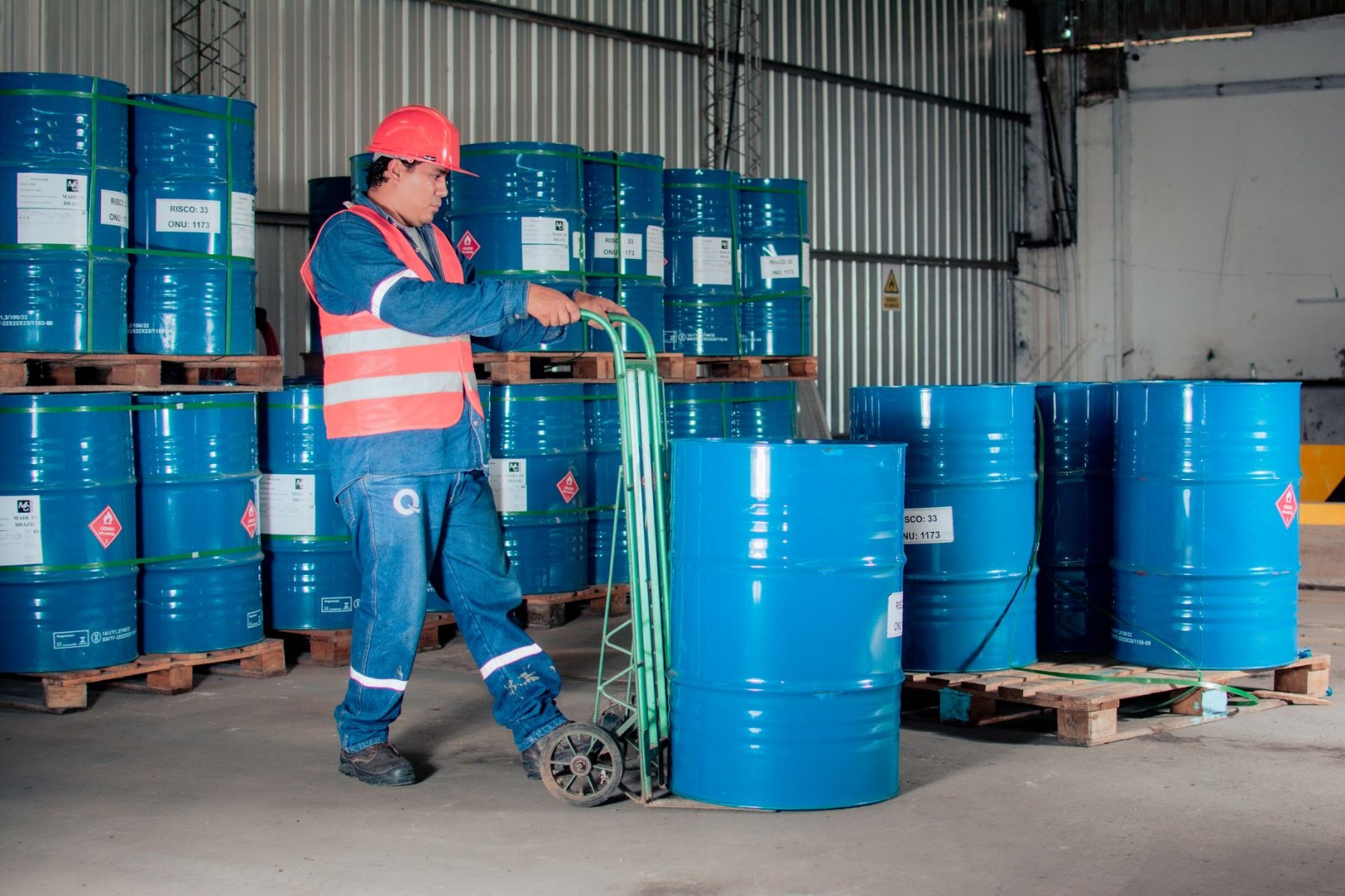
Industrial worker with a hand truck moving blue barrels in a warehouse setting. · Photo by Martin Zapata on Pexels · Original source · Pexels License · Resized and re-encoded as JPEG; full framing preserved.